Women's Philharmonic Advocacy
facebook

Music by Florence Price Featured by the Chicago Symphony and Others.

A Conversation with Conductor Mei-Ann Chen

by Liane Curtis - May 13, 2013

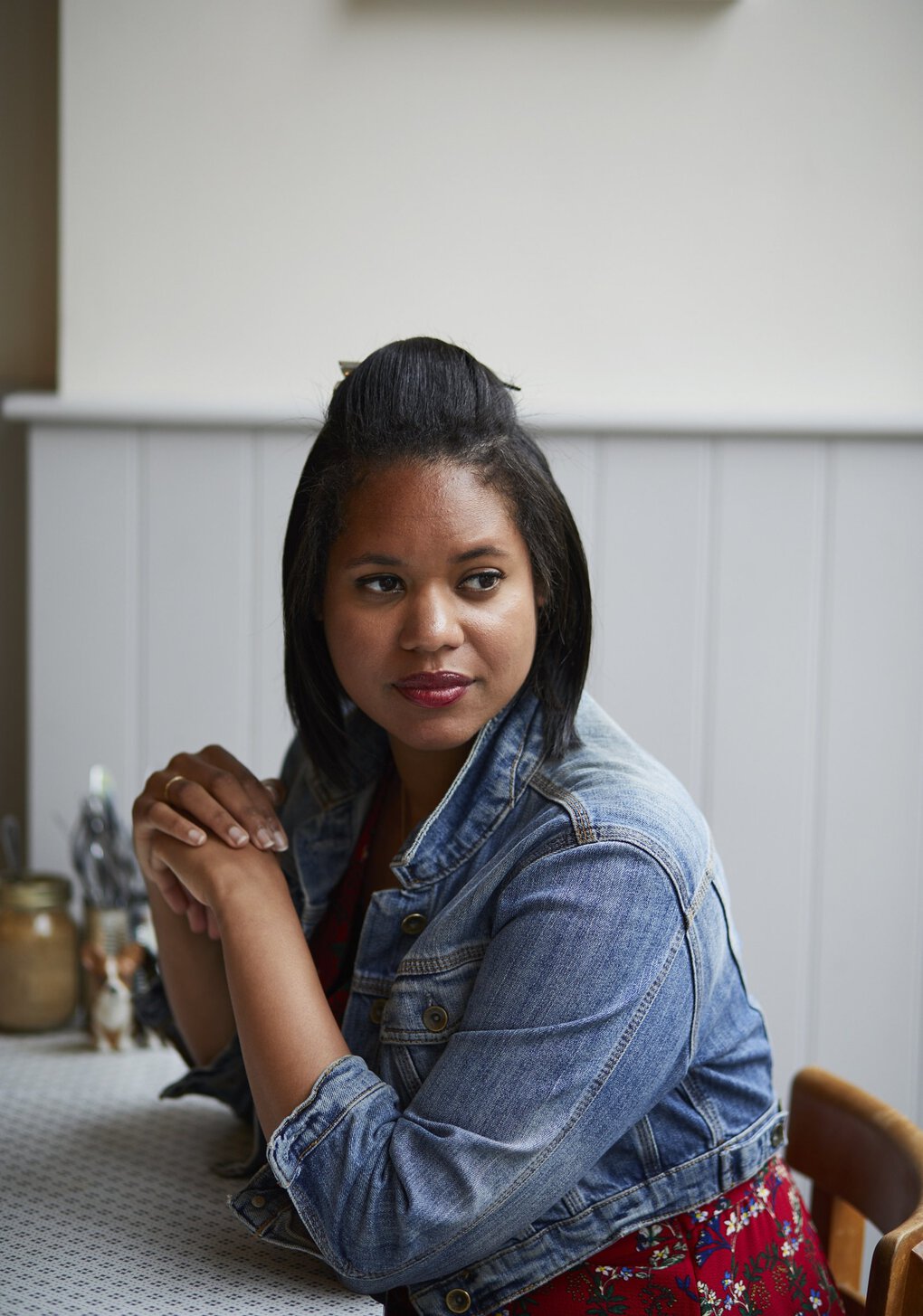
Mei-Ann Chen is Music Director of the Memphis Symphony and the Chicago Sinfonietta.  Earlier this year she guest-conducted with the San Diego Symphony, and on May 9 she made her subscription debut with the Chicago Symphony.  This is four orchestras and their audiences to whom she has introduced the music of Florence Price.

A few weeks ago she was kind enough to take a few moments from her busy schedule and talk with me about how this all came about.

Liane Curtis:  I just recently discovered what you are doing when I saw they were going to play the “Mississippi River” Suite in Chicago. So I want to ask you about her, about Florence Price.

MEI-ANN CHEN:  I have to admit I didn’t know much of Florence Price’s music before Martha Gilmer of the Chicago Symphony approached me with her Mississippi River.  Martha has been the Vice President for Artistic Planning and Audience Development with the Chicago Symphony for a long time, and obviously Florence Price being very special to Chicago Symphony’s history, I think she has been waiting for the right conductor to come along.  …  It will kick off the Rivers Festival that was sugested by Yo-Yo Ma.  Yo-Yo has an official role as a Creative Consultant with the Chicago Symphony now.

Martha has been following my career because she has family from Memphis…her family there has been sort of the ‘spy’ [laughs] for Martha and what’s happening with Memphis.  And one thing led to another.  So when Martha approached me and said “how would you like to do this piece?”  I said “Oh my gosh, I totally don’t know this composer.” …

I just read the blog that you have—it’s wonderful that you are continuing to advocate for women composers.  So, this year, as you know I have done “The Oak” [also by Florence Price] with Chicago Sinfonietta, and there’s one more piece that I’d like to mention because it’s a hidden jewel.  We had to change one of the programs in Memphis … so I thought it would be a nice opportunity to find another piece by Florence Price for our audience to learn about her work in preparation for the Mississippi River that we’re doing to end our Masterworks season.

And so I found another piece by Florence Price, I don’t know if you know, it was originally written for piano, called “Dances in the Canebrakes.”  William Grant Still orchestrated it for her, even though she knew how to write for orchestra, but I don’t know, maybe they were such good friends that William Grant Still thought this piece really deserved an orchestral treatment. It’s so delightful!  But I can tell you when we got the parts from the publisher our librarian was a little bit horrified … It just looked like it hasn’t really been performed with an orchestra.  So we actually got permission from the publisher to create a set [of parts] that our musicians can use.  That way the publisher could continue to use this very well-made set for other orchestras.

So I’m going to do that again with Chicago Sinfonietta coming up in June for our Annual Ball, which is the largest fundraising event for the Sinfonietta … a lot of African-American community leaders will be attending.  And in the same concert we will also be previewing our next season in which we will be doing the last two movements of Florence Price’s Symphony in E, which is Symphony No. 1; it was premiered by the Chicago Symphony in 1933.

LC:  Great!  That’s good to know! So you’re doing “Dances in the Canebrakes” in Memphis?

CHEN:  We just did it in January.  And I will be doing it also with the Chicago Sinfonietta coming up in June.  And they’re such delightful pieces, and really orchestrated well, but nobody knows!  We’re also trying to spread the word to other orchestras. It might be wonderful for people to consider programming it.

LC:  I know you did some Florence Price in San Diego because I sold a lot of CDs there [The Women’s Philharmonic CDs that we sell on our website]. 

CHEN:  Oh, wonderful!  Yes, I did Mississippi River in San Diego in February this year.  I’m scared to do anything for the first time in front of the Chicago Symphony.  And so it was actually a wonderful thing that San Diego had this response when I pitched it, they said “Sure, why don’t we do it here!”  And I have to tell you the librarian there, Courtney [Cohen] was so wonderful because she compiled a 10-page errata list for the piece.  You might be able to help us to solve this mystery, because it’s been recorded by The Women’s Philharmonic, so there must be a good set somewhere where all the wrong notes were caught…because the recording has the correct pitches compared to the many misprints in the parts she received for the San Diego program.   Courtney said she couldn’t find that set used by the recording used for the recording, so she actually had to start from a brand new set.  But the wonderful thing is this 10-page errata list compiled by Courtney will go on to the Chicago Symphony for my next performances in May and to Memphis as well; it will save a lot of rehearsal time for both—and future—orchestras.

LC: The thing about The Women’s Philharmonic, when they shut down in 2004, there’s been a dispersal of their collection and their knowledge.

CHEN:  I see.  Hopefully now the piece can become mainstream and at least we have done a lot of the footwork, the hard work for it, that will make it easier for other orchestras to do it now.

LC:  Just on another subject, I know that you’re traveling so much and you go back and forth between Chicago and Memphis?

CHEN: Right. Because I’m Music Director to both Memphis Symphony and the Chicago Sinfonietta, (the latter being the most diverse orchestra in the country, founded to promote minority musicians of all kinds).  The Chicago Sinfonietta is unique with its mission.  Soloists, conductor, musicians…and it was very specific when Maestro [Paul] Freeman founded it, to promote African-American musicians and Latino musicians, so my appointment as Maestro Freeman’s successor surprised a lot of people.   However, being in such a diverse world, it’s a goal for us to embrace  more of a global diversity.  But I think Maestro Freeman has also been promoting women composers and so it’s neat that even though Florence Price was probably not a composer whose music he had come in contact with, it fits nicely in terms of in my Chicago Symphony debut that I’m able to champion for an African-American woman composer.

LC:  Great.  Wonderful.  So are both cities home for you now? 

CHEN:  Yes, Memphis is larger in budget size and so the longer season requires more of my residency.  I spend 18 weeks in Memphis, and 12 of the 18 are conducting weeks.  Now, in Chicago I spend eight to ten weeks a year and I consider myself also a Chicagoan.  Our Sinfonietta season is a lot smaller in size.  I conduct four concerts with the Chicago Sinfonietta, but there are other projects.  For example we have a program called Project Inclusion, which is about to really gain national recognition from major foundations. It’s probably the only program that creates opportunity not only in small ensembles but also in side-by-side opportunity for music students who haven’t yet garnered enough experience to land a professional position in either an orchestra or a teaching position.

And so it’s really a small orchestra, but with mighty impact in the industry.  For example, the Grant Park Festival Orchestra, which is quite well known, serves the Chicago Millennium Park with free concerts in the summer. We are going to begin a partnership as part of our Project Inclusion; participants will be playing side-by-side with their professional musicians this upcoming summer season.   And so we are hoping to use my professional network, and our wonderful Executive Director Jim Hirsch’s professional network, to pitch a similar concept to other professional orchestras to encourage more presence of minority musicians among the symphonic world in our country, and to also encourage those …who don’t really grow up with classical music—it’s so important that they get exposed to it as much as possible.

LC:  That’s fantastic! 

CHEN:  And I hope you will include “Dances in the Canebrakes” on your blog because they’re really delightful pieces.  There’s a recording of the piano version but there is no commercial recording yet available of the orchestra version.  My first commercial disc is coming out very soon, featuring the Harlem Quartet [and the Chicago Sinfonietta], with one world premiere and pieces that are out of print.  I already told Jim Hirsch my hope for the next recording project: to include Florence Price, at least the “Dances in the Canebrakes” for sure.

LC:  Oh great, fantastic.  Excellent!  I’ll look forward to that and thank you so much again. 

CHEN:  Thank you for all you’re doing to advocate for women composers!

[And thanks to Susan Brown for her help in transcribing this interview.]

Making Waves with the Mississippi River Suite: Mei Ann Chen Brings Florence Price’s Music to Chicago Symphony

by Liane Curtis - May 11, 2013

Acclaimed conductor Mei-Ann Chen is just completing her first year as Music Director of the Chicago Sinfonietta.  And Thursday she made her debut as a guest conductor of the Chicago Symphony Orchestra‘s subscription series.  She made quite a  ”splash” with Florence Price’s Mississippi River Suite—the press has been filled with praise for the inspired leadership she brings to this work.

The Chicago Tribune’s John von Rhein enthuses that “Chen clearly believes in the musical merits of ‘Mississippi River,’ and she succeeded in transferring her admiration to the orchestra”—and the audiences as well!  Dating from 1934, ” the suite is attractive, tuneful, nostalgic, cannily scored, direct of expression,”  and and example of   “unabashed populism.”   “Is a Florence Price renaissance upon us?”  asks von Rheim.  Clearly the answer is “yes,” if we follow Chen’s activities—she led the San Diego Symphony in the Mississippi River Suite in February, and will bring the work to her Memphis Symphony next weekend.  She already performed Price’s “Dances in the Canebreaks” (as orchestrated by Price’s friend William Grant Still) in January in Memphis, and will bring it to the Chicago Sinfonietta on June 1.

Describing the Mississippi River Suite, Wynne Delacoma  (writing in the Chicago Classical Review) was moved to write in detail:

 In the last movement, solo instruments came and went like musicians heard on a nearby shore, a moody trumpet or glowing horn or ardent cello playing snatches of such spirituals as Nobody Knows the Trouble I’ve Seen and Go Down, Moses. Spiced with bits from popular songs of the 1900s, the musical layers came together in a jaunty mashup. But in the closing bars the river once again smoothed out into a gently flowing undercurrent and the call of a lonely harp.  …  The concert was an auspicious CSO subscription concert debut for Chen … With luck, we’ll see her again on the CSO podium.

And with luck, more ensembles will be bringing Florence Price’s music to life!
 

The Performance: Beach’s Concerto Comes to Life!

by Liane Curtis - November 16, 2012


Rochester Philharmonic Orchestra in area premiere of rare, remarkable Concerto. [update added at end after hearing second performance]

Amy Beach was 33 years old when she gave the premiere performance of her own Piano Concerto (op. 45 in C-Sharp Minor) in April 1900. Although her husband had restricted the pianist-composer to one public performance per year since their marriage in 1885, she had experience under her belt performing concertos by Beethoven, Mozart, Mendelssohn, Saint-Saëns,  Moscheles, and Chopin, mostly with the Boston Symphony. Her Concerto is a work of monumental proportions, demanding the utmost of virtuosity from  a fiery  soloist.  Would the 23-year old Saet Byeol Kim emerge not only unscathed but heroic in this vigorous battle of soloist vs. orchestra?   

She did indeed, and after the final majestic chords, the audience was on their feet in an ovation to affirm that fact.

The orchestra begins the first movement with a brooding motive (shaped insightfully by Remmereit). The soloist’s first entrance is a huge assertion—here is the 19th century concerto tradition, in all its stormy, extrovert glory.  And counterbalanced by lyricism, as the second theme—an evocative, haunting phrase, stated first by the soloist, and developed warmly by a violin solo (Concertmaster Juliana Athayde). For this theme Beach borrowed a melody from one of her own earlier songs (I’ve provided the poems for these songs in an earlier post).Saet Byeol KIM

Saet Byeol Kim infused the Scherzo with relentless sparkling energy. Here Beach took the staid melody of another of her songs, stating it in the lower strings where it serves as the background for the playful Pertetuum mobile, a fantastically energized version of the song’s simple arppegiated accompaniment. It was breathtaking!

Beach described the Largo as a “dark, tragic lament.”  She borrowed from her own early song “Twilight,” setting her husband’s poem about darkness setting over a dense forest scene. Beach’s re-use of her creation offered her an opportunity to place these musical ideas in a rich, multi-layered context (sculpted gorgeously by the orchestra). The melody was introduced by a poignant clarinet solo (Kenneth Grant). Here I thought Kim might have had more depth of emotion and meshed more tautly with the orchestra; her Chopinesque flourishes were brilliant emotional outbursts.

The final line of  the poem “Twilight” is about light and brightness returning to the land; the mood is captured in the final movement, Allegro con Scioltezza.   Scioltezza—nimbleness or agility—heard in the  soloist’s vivacious energy dominating the musical landscape. The soloist opens alone, with a driving motive akin to a  Mazurka. While Kim played  with great energy and musicality throughout, this movement especially had great flair and momentum.  The center section recalls the soulful Largo theme; the soloist winds back to this Largo idea with an almost jazzy meditation, and then has an evocative duet with a solo cello (Stefan Reuss). Handfuls of big cascading chords lead to the vigorous conclusion,  and the powerful and expansive grandeur of the final cadence.

Mussorgsky’s atmospheric Introduction to Kovanschchina was a perfect concert opener, and Tchaikovsky’s Sixth Symphony —well, we know that piece, don’t we?  It was a thoughtful and well-balanced program. For me, the chance to hear a remarkable work like Beach’s concerto was well worth the travel.

For  her U.S. debut, pianist Saet Byeol Kim has made a definite mark on the artistic landscape, and I hope she will have many other opportunities to bring this work to audiences.  And Arild Remmereit and the RPO continue in their remarkable, essential mission of bringing such great—but little-known—masterworks to the ears of audiences!

–––––* * * * * * * * *

Update — after hearing the Saturday (Nov. 17) concert — Saet Byeol Kim again impressed with the energy and freshness she brought to the piece, it was not at all a carbon-copy of the Thursday performance. She reached real lyrical heights in the third movement, Largo. The first movement, with its imposing length, had moments of solo and orchestra careening into imprecision, but these were (fortunately) very brief. The overall effect was powerful and exhilarating, and the Saturday audience could not contain their applause after the first movement, and gave Kim, Remmereit, and the  orchestra a lengthy and insistent standing ovation!

Oh, and that Tchaikovsky—the Sixth needs both understanding of the underlying architecture, as well as fiery passion; Remmereit and the orchestra had an inspired chemistry throughout. Particularly striking was dance-like grace of the second movement, with its almost-waltz of 5-4 time. And the overwhelming power of the fade-to-nothing ending, which I heard, not as tragic resignation, but rather as a determined resolve. I certainly have not ever experienced a large audience all holding their breath for so long, so complete was the spell of the peroration, one I will not forget.

Nancy Reich Honored with AMY Award

by Liane Curtis - September 22, 2012

Ossining, NY — Sept. 20. 2012

Nancy B. Reich (center), with Liane Curtis (right) and Judith Tick.

As President of Women’s Philharmonic Advocacy, I am proud to grant the AMY Award for Lifetime achievement in Music Scholarship to Dr. Nancy B. Reich. Her book, Clara Schumann: The Artist and the Woman (1985; rev. ed. 2001), was the first book of serious musicological scholarship devoted to a female musician. The very different scholarly landscape that surrounds us now, in which feminist scholarship and interest in women’s lives and musical creations is mainstream, is in a great part due Dr. Reich’s pioneering work.

Today Clara Schumann is both the subject of a range of scholarly inquiry as well as increasingly part of everyday discourse. For instance, witness the Google Doodle just last week—the first Doodle to honor a female musician. As a composer, Clara Schumann’s music, from her songs, piano music and chamber works, to her powerful piano concerto, are widely performed and recorded.

Reich’s subject matter was new for the field of musicology, but her research methods were solidly grounded, and the precision, detail, and discipline with which her work was carried out has led it to be widely respected and influential.

Dr. Reich has been generous and helpful to scholars from around the globe who are researching Clara Schumann and related subjects. By honoring Dr. Reich we recognize and celebrate her impact on musicology, as well as on the musical world in general.

Reich’s Clara Schumann: The Artist and the Woman, was hailed by critics as a major contribution and has been translated into German, Japanese and Chinese. In further celebration of Dr. Reich receiving the AMY Award for Lifetime Achievement in Music Scholarship, we are happy to announce that Cornell University Press, the publisher of Dr. Reich’s book, plans to reissue it in electronic format in the very near future.

More on the Presentation of the AMY Award

by Liane Curtis - June 7, 2012

It took place a week ago—the presentation of the first ever AMY Award—and what a thrill it was.  I was so honored to give the award before the full orchestra (the Rochester Philharmonic Orchestra), and the near-capacity audience (almost 2400, including the 500 violists in attendance for the International Viola Congress).  It took place just after intermission—the first half of the program was works by Margaret Brouwer and Sofia Gubaidulina (it was actually quite extraordinary to have two works by women on a single program), and after the presentation, the program concluded with Mussorgsky’s Pictures at an Exhibition.  I thought I would share the entire text of my speech:

Women’s Philharmonic Advocacy was launched four years ago with the goal of encouraging orchestras to program more works by women. We wanted to carry on part of the mission of The Women’s Philharmonic, a professional orchestra that was based in San Francisco from 1980 to 2004. Over those 24 years, they performed more than 300 works composed by women from the 17th century to the present.

Of course recent decades have seen considerable change, so we have, on the one hand, women who are among the most performed and recognized contemporary composers—but on the other hand, if you look at statistics provided by the League of American Orchestras, you find that the overall number of works composed by women is still only no more than 1.7 percent of the orchestral performance repertoire. That is a very tiny sliver of the composer pie.

So when we noticed what was happening here in Rochester, with Maestro Remmereit and the Philharmonic, we thought we had better come up with an award for this. This is what we want  to see as the new normal,  a model for orchestras across the country: to explore new new repertoire—commissions and works by living composers—and also new, old repertoire—that is, works from the past decades and centuries, the buried treasures that today’s audiences have never had  a chance to hear.

We decided to name our award the AMY Award, after Amy Beach. As you know, Beach was the first American woman to have a symphony performed. She published more than 300 works, yet—after her death, like every other female composer she was erased from the repertoire and from music history.

Last fall you had the exciting opportunity to hear Beach’s masterpiece, her Gaelic Symphony. This fall you will get to hear her Piano Concerto.  Perhaps in 2013 it will be time for her monumental Mass, a work which, despite its grandeur, has never been professionally recorded. And in 2014 maybe we will hear her Balkan Variations. And perhaps in 2015 her concert arias. And did I mention her Mass has never been recorded?

I hope you will agree that in embarking on this pathway of discovery, Maestro Remmereit  has not forced you to listen to a lot of crummy music. By introducing new works to our classical traditions—creating classics—the orchestral world will be strengthened and invigorated, and audiences will be excited by the discoveries that span continents, centuries, and genders.

Will Maestro Remmereit please come forward to accept the award.

The sculpture is by artist Rita Blitt.  It stands ½ inch taller than the Oscar statue, and we think it is much more beautiful!

On behalf of WPA, I am happy to present Maestro Remmereit and the Rochester Philharmonic Orchestra with the AMY award for excellence in orchestral programming.

Everyone was so excited by this, and Maestro Remmereit was very moved. We didn’t get any pictures, but there is this one from the reception afterwards. But I am definitely going back in the fall!

ALSO:   Our Board plans to announce the details (on June 18) of another program to encourage including more works by women to the orchestral repertoire, our WPA Performance Grants.


Fanny Hensel’s Cantata in Streaming Broadcast, May 7 at 8 pm

by Liane Curtis - May 6, 2012


The Rochester Philharmonic’s concerts are encored in streaming radio broadcast—

this concert (May 7,  2012 Monday, at 8 pm) starts with Fanny Hensel’s Cantata, “Job.”   Find the WXXI Classical 91.5 Stream Player here

http://interactive.wxxi.org/listen#fmstream

Here is the schedule for the Broadcasts   http://interactive.wxxi.org/rpo/listings

The Cantata is not very long (ca. 15 minutes), and then is follow by Mahler’s 2nd Symphony. The one CD of Hensel’s Cantata is now out of print, so this a rare opportunity to hear this work.


A Woman Composer Speaks Out

by Liane Curtis - April 4, 2012


Over on http://www.newmusicbox.org/ there is a lively—chaotic, even—debate going on about the identity politics of the “woman composer.”   

Composer Rain Worthington wrote the post below as a comment to Rob Deemer’s post, A Helpful List .  With her permission, we re-post it here.  LC

 
I joined the New York Women Composers organization in 1997 when I first began notating music for mixed instruments. As a self-taught composer, I was excited to join ALL the composers’ membership organizations that I learned about—AMC, ACF, NYWC, and later, IAWM. I eagerly looked forward to moving within this new cultural network,to exchange ideas with colleagues and listen to the wide variety of contemporary composition happening.

A decade later I stepped up to serve as the Director of Development for the NYWC.

The question has arisen from time to time, whether there is still a need for organizations devoted to the promotion of women composers and women’s concert music.

With this, and a grant application, in mind, I did some informal research into the general representation ratios of women composers in such areas as radio broadcasts, grants and awards, and membership in the two big national composers’ membership organizations at the time: AMC and ACF.

As I mentioned, this was a very informal research undertaking on my part. Personally, since I was aware of many women composers, I expected to encounter some discrepancies in the gender representation numbers, but thought it would not be that large a gap.

I was shocked to find this wasn’t the case. Of the several months of radio broadcasts I surveyed from the four classical stations that I had randomly selected, the ratio of women composers’ music played was less than 1%.

The ratio of women recognized in grant programs and awards that I looked at over the past decade was slightly larger, approximately 10-15%.

But nothing came close to reflect the ratio of women’s membership in the national composer organizations which was about one-third women, to two-thirds men.

While I don’t know why the discrepancies still exist in this day and age and in this country, I do know that it is certainly not because of any lack of quality of music being composed by women.

It would be great if concert programs, radio broadcasts, grants and awards could more accurately reflect the overall gender ratio of composers actively working in the field, and yes, many composing high quality contemporary music.

I absolutely agree with your statement that “It is only through awareness that one can identify that “excellent” music to begin with.”

Increased awareness of contemporary women working in the field of composition is not a limitation, but an expansion of resources and knowledge. This provides an enrichment of perspective, rather than a reduction or narrowing.

I commend you for initiating this list, and to the resulting discussion it has generated, including all the additional names posted in the comments.

FYI, the New York Women Composers website a good resource for music by women composers, (many of whom are listed above) with Composer Profile pages, and searchable Catalog, with pdfs & audio samples.

Rochester PO Announces 2012-13 Season

by Liane Curtis - March 2, 2012

The Rochester Philharmonic just announced its 2012-13 Season.  In his second season, Maestro Arild Remmereit will continue the orchestra’s exploration of great works by women, both historic and contemporary.

As we mentioned in our earlier post, we are thrilled to see the orchestra making this commitment to women. Remmereit recently served as keynote speaker at the annual fundraising luncheon of the Susan B. Anthony House and Museum. Emphasizing his commitment to women composers, he stated that music “is a necessity and shouldn’t just be in the hands of very few.”  What GREAT NEWS!  Happy Women’s History Month, but also nice to think that women aren’t only for March anymore!


Opening Night at the Boston Symphony

by Liane Curtis - September 30, 2011
Liane at Boston Symphony Hall

Liane at Boston Symphony Hall, 9-30-2011

–  Hey, I haven’t worn a sandwich-board since the VPO protest of 1999!  A lot of fun!

My sign reads:

BSO, why are women composers excluded?
2011-2012: 70 pieces by 32 composers—
ALL of them MEN.
Women’s Philharmonic Advocacy
www.wophil.org
Sign our mailing list!

And I handed out a flier (200 of ‘em!).  It’s amazing how some people look right through you when you are trying to hand them something. Others were, of course, full of interest and enthusiasm! I met some very kind people! And I met BSO artistic administrator Tony Fogg, who I had written back when I wrote James Levine and Mark Volpe in 2008 (and several times after that). He said that he had written me back a lengthy reply, but I never received it.  Too bad to have a miscommunication, I will try again … and again …

Here’s a link to the front of the flier in PDF format  (the back was a summary of my letter to the BSO referenced above)

BSO-Do you recognize them


The Verdict is In!

by sarah - November 21, 2008

There has been a recent buzz about the list of the world’s top symphonies that Gramophone has put together. It seems to have taken many classical music enthusiasts by surprise that the top American orchestra (listed as number five) is the Chicago Symphony. The Cleveland Orchestra is listed as number seven.

The story and complete listings can be found via NPR here.


The rankings were determined after polling music critics from the United States, Europe and Asia who were asked to list their top 20 orchestras. James Inverne, editor for U.S. Gramophone suggests that the difference between Chicago and the rest of the U.S. Symphonies was their distinct sound – particularly the strength of the brass. Others have also credited Chicago with their excellent financial status, which is a rarity in most orchestras.

In my own research (that I have of about before, if only briefly) concerning the recent repertoire of the top American orchestras, the Chicago Symphony has stood out quite clearly from the rest. In fact, Chicago has received a gold star in my book by being the orchestra with the best track record for performing works by women composers – a total of 13 in the past 7 seasons, including works by Clara Schumann and Lili Boulanger, as well as commissioned works from Augusta Read Thomas (who was composer in residence from 1997-2006) and Melinda Wagner. This is a phenomenal record considering that most of the other ensembles I have looked at only report performing half the number of works by women, and of they consist almost exclusively of works written in the very recent past.

The Cleveland Orchestra, which was listed as number seven in the list of top 20, ranks just behind Chicago in the number of works by women performed in their recent seasons, totaling 10, though all recent compositions.

Though the factors that have led to the rankings appear to be largely subjective to personal opinion by music critics, I would like to think that these critics (at least in the United States) were also appreciative of varied repertoire. Even if it is only a happy coincidence, it is certainly worth noting.