Women's Philharmonic Advocacy
facebook

More on Ethel Smyth’s Mass

by Liane Curtis - April 4, 2013

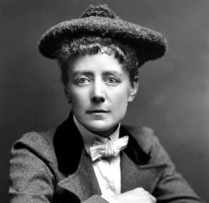
In anticipation of the April 14 performance of Ethel Smyth’s Mass in D Major, Liz Wood (musicologist and widely published author) gave an illuminating talk about Smyth and the origins of her Mass.  Virginia Woolf described Smyth’s vigorous character, calling her a pioneer and a courageous window-breaker (referring to her role in the Suffrage movement).  The image we get of Smyth is close to that of the dread-naught,  the largest and most-feared of the British warships.  It’s true that Smyth’s personality could be overpowering. But also her musical ability and creative powers reveal a composer of monumental stature, and her personality should not distract us from that.

Smyth, in her period of study in Leipzig, was introduced to Brahms and Clara Schumann, and became very friendly with Grieg and his wife.  But a focal point of Wood’s presentation was the role of Tchaikovsky.  He not only praised her chamber works (in particular the Violin Sonata in A Minor, Op. 7), but also he emphatically urged her to turn to writing for orchestra, so that the grand scope of her musical vision could be better realized.  “Listen to the voices of people in intelligent conversation,” he urged her, “to engage with the nuances of tone color and articulation.”  Smyth took him very seriously, and threw herself into the study of orchestration, by following that unorthodox advice, and also by the more time-honored practice of attending symphonic concerts and turning her ear to the use of the orchestra.

Ethel Smyth

Ethel Smyth

Another central issue in Wood’s presentation was Smyth’s turning to religion, in the face of personal crisis.  Smyth was overwhelmed by confusion after she was rejected by a lover, and consequentially also lost  her artistic supports and mainstays—the circle who had previously encouraged and nurtured her during her study in Leipzig.   To understand the intersecting love triangles/quadrangles one would surely need some kind of chart.   Then her emotional upheaval continued as she experienced death—of her mother, and then of the love interest who had spurned her.  The turmoil left her reeling and confused.  She turned to religion and the Mass is the result.  “That’s the answer,” she wrote to a friend, with a sense of revelation, “Angus dei, qui tollis pecata mundi, dona nobis pacem.”    After writing the Mass— and its successful premiere in 1893—Smyth returned to her secular belief system and wrote no more religious music.

Concerning her placing of the Gloria movement last, this allowed her to have a conclusion that was jubilant and triumphant.  It was also is (as Wood pointed out) a feature of the Anglican liturgy.

Chatting with the Cecilia Chorus’ music director Mark Shapiro, after Prof. Wood’s presentation, he was eager to express his enthusiasm and commitment to the work.  It will be his second time to conducting it—he led the Monmouth Civic Chorus (New Jersey) in it just over 20 years ago (celebrating the centennial of its premiere), and he is thrilled to have this opportunity to bring a new level of insight and experience to this piece, which he sees as a profound expression of the human soul.   Some of the chorus members (who were excited to be able to attend the talk and learn more about Smyth) also commented on how impressed they were with the Mass, and how happy they are to bring this great work it to New York and Carnegie Hall. 

In short—looks like it’s the place to be on April 14, tickets available here!
 

In Honor of Women’s Suffrage!

by sarah - March 5, 2013

The Library of Congress blog reminded me today of the 100th anniversary of the Women’s Suffrage March on Washington. Please do read the full post about the important history that helped propel the nation forward. Women’s Philharmonic Advocacy would like to remember the important milestone with an old favorite—Dame Ethel Smyth’s “March of the Women” written for the British suffrage movement. March on!


NPR’s “Biggest Badass Composers”

by sarah - July 6, 2011

NPR’s Deceptive Cadence picked up on a twitter feed recently questioning which composer is the “biggest badass”, with qualifications to include drugs, sex, guts and politics.

The list of composers included (surprise!!!) no women. Though the list, which was compiled here, did include Carlo Gesualdo, a late Renaissance composer who is remembered for his madrigals, chromaticism, and having murdered his wife and her lover and placing their bodies on display. (Interesting that instead of being remembered as a murderer he is praised as being “badass”…)

But this omission of women must have been an oversight – especially considering all of the badass women composers that have lived. My short list includes:

Hildegard von Bingen (who was included in the comments on the NPR story – thanks to Christine Beard)
She was an abbess, mystic and prophet who stood up to every authority in the Medieval Church, including the Pope himself, and lived to tell about it. She was also the first composer to so fastidiously document their work and sign their name to it – unheard of for even men at the time.

Dame Ethel Smyth
How much more badass can you get than being arrested for the cause you are fighting for (British women’s suffrage) – and continue to lead your followers even from behind prison bars? (Who doesn’t know the story of Smyth conducing her “March for Woman” from her cell window with a toothbrush??)

Nadia Boulanger
Forced to work at a young age due to the death of her father, Nadia took on jobs performing and teaching music to support her family. She took on the Prix de Rome by force and ruffled feathers along the way. Though she didn’t win (second place isn’t shabby either), she certainly paved the way for other women, including sister Lili. Nadia was also the first woman to conduct the BBC Symphony, Boston Symphony, the New York Philharmonic, and the Philadelphia Orchestra. Her students included Aaron Copland and Astor Piazzola, and seemingly countless others, and her work continues to live on through the next generations.

Wendy Carlos
Wendy’s work with the Moog synthesizer, most notably her album Switched-On Bach re-introduced classical music to the masses. That album, first released in 1968, was one of the first classical LPs to sell 500,000 copies – eventually going gold and platinum. The album also brought home three Grammy awards: Album of the Year (Classical), Best Classical Performance, and Best Engineered Recording (Classical).

Clara Wieck Schumann
A child prodigy who defied her father to marry Robert, Clara also completely changed the format and standard repertoire of piano recitals. She took care of an often-ailing Robert and raised seven children while traveling and performing to make sure that they and continuing to travel and perform to share Robert’s music and bring home a paycheck. She out lived four of her eight children (one died in infancy) as well as her husband, and cared for her grandchildren when necessary. She continued to advocate for Robert’s works, including taking the lead roles of editor and interpreter until her death.

But this is just five of certainly dozens of women composers and musicians who fought the odds and managed to make a place in history for themselves (even if it is often forgotten in text books and in online polls).

Who else should be on this list???

Remembering Phyllis Tate

by sarah - May 6, 2011

A post at The Overgrown Path gave a passing mention to the work of British composer Phyllis Tate. The specific reference was that she, among other British composers, were often neglected due to the fame that Benjamin Britten carried throughout his lifetime. In reading the brief article I was glad to be reminded of the life and work of a composer who continues to be neglected.

Phyllis Tate (1911-1987) was a British composer whose works often fell in the avant-garde category. She had very auspicious beginnings, reportedly being kicked out of grade school for singing bawdy songs, and later teaching herself how to play the ukulele. Though she did continue to the Royal Academy of Music for formal training and was a prolific composer. During her lifetime she had several commissions, including several from the BBC.

She primarily wrote chamber pieces with unorthodox instrumentation and was extremely critical of her earliest works; she destroyed all of works she composed before 1940. Her works were well received in her lifetime. In fact, after hearing her play Dame Ethel Smyth was said to declare, “At least I have a heard a real woman composer!” (More on that anecdote found here.)

Here is an example of her work – Sonata for Cello and Clarinet (1947):

More on Women’s History Month

by sarah - March 17, 2011

As I mentioned at the beginning of this month, every month is Women’s History Month at WPA, as it is in every feminist community.  There are many concerns and mixed feelings about what it means to separate one month for the recognition of one group – and understandably so.  If we remember the works of women in March, does that mean we get to go back to neglecting them in April?  Certainly not – but that is more than likely the case in the general public.

This March there have been several notable “celebrations” of women’s work in music by different radio stations and publications.

WGBH in Boston has been featuring the contributions of women to classical music each weekday morning in the 7 o’clock hour.  Shame that it isn’t featured in a later program when more listeners might be listening (though, I suppose there might be at least a few sitting in rush hour traffic….)  WGBH also did a feature on Nadia Boulanger in honor of Women’s History month, though the cynic in me is quick to note that Nadia is mostly remembered as the teacher of many famous male composers.

Amanda Angel of WQXR in New York City compiled a list of the “Top Five Women Composers” to counter Tommasini’s list of top ten composers that neglected any women.  On WQXR’s list are Clara Schumann, Fanny Mendelssohn, Amy Beach, Hildegard von Bingen, and Lili Boulanger.  Though the effort is commendable, the piece lacks some careful fact checking and depth that is deserved on the topic.  But, I am rather biased.

Certainly the best piece that I have (at least as of yet) seen featuring women composers in March is by Fiona Maddocks of The Guardian.  The opening paragraph sets just the right mood:

Try this test. Write down all the women composers you know of. No, don’t run away. Given the nature of this column, stick to contemporary classical. Too hard? OK, include anyone, past or present, who has written religious, symphonic, chamber, vocal, choral, operatic, electro-acoustic works. To make it simple, film and TV scores are allowed too. Still zero? You’re in distinguished company. The Guardian‘s 100 Most Inspiring Women this week, marking the 100th International Women’s Day, featured not one.

Though, the candor that Maddocks shares with readers shouldn’t be surprising – Maddocks is familiar with the topic of women in music, having written a biography of Hildegard von Bingen.  Her piece, which I highly recommend, not only recognizes the continued absence in programming (specifically in the UK), but also the efforts that are being made.  For example, Sue Perkins, who won the reality-TV conducting competition several years back, conducted an all-women’s orchestra in a performance of Ethel Smyth’s “The March of the Women” as the final performance of the Women of the World conference held last weekend.  Maddocks concludes her piece with a list of eight young composers to look out for.

Certainly, we are working towards a time where it is not necessary to highlight the gender (or race, or nationality, etc.) of the composers that are being performed.  The challenge that Maddocks presented to her readers clearly demonstrates that we are not yet even close.  Till then, our work continues.

A Look at Dame Ethel Smyth

by sarah - March 2, 2011

Remembered for her political work as well as her compositions, Dame Ethel Smyth (1858-1944) was an inspiring and impressive figure in Britain throughout her lifetime. Though she received resistance from her family as she pursued a career in music, she was rather successful in her lifetime. Though her compositions include chamber pieces, a Mass, and symphonic works, she is remembered primarily as a composer of opera; her oeuvre includes 6 completed operas.

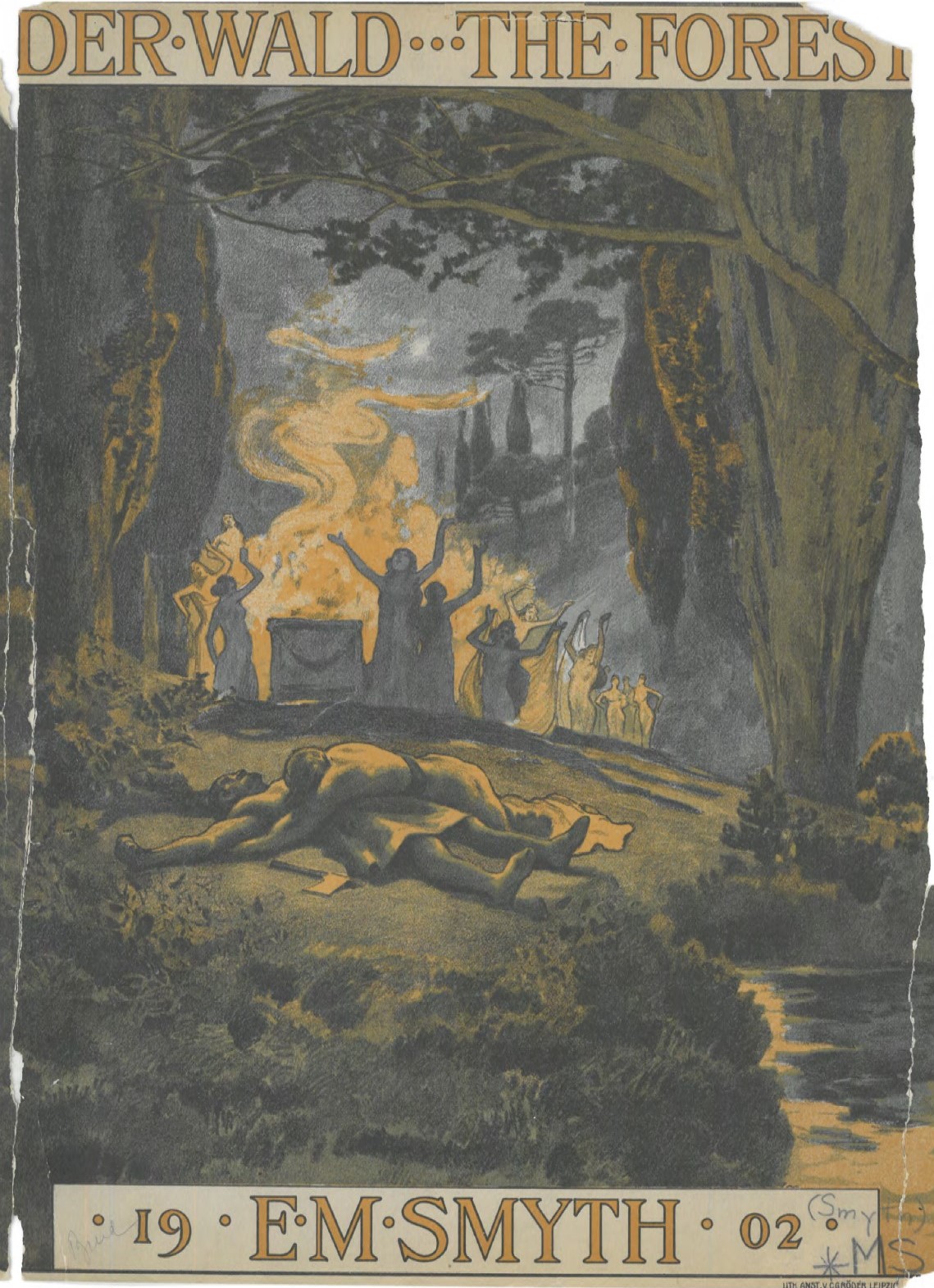
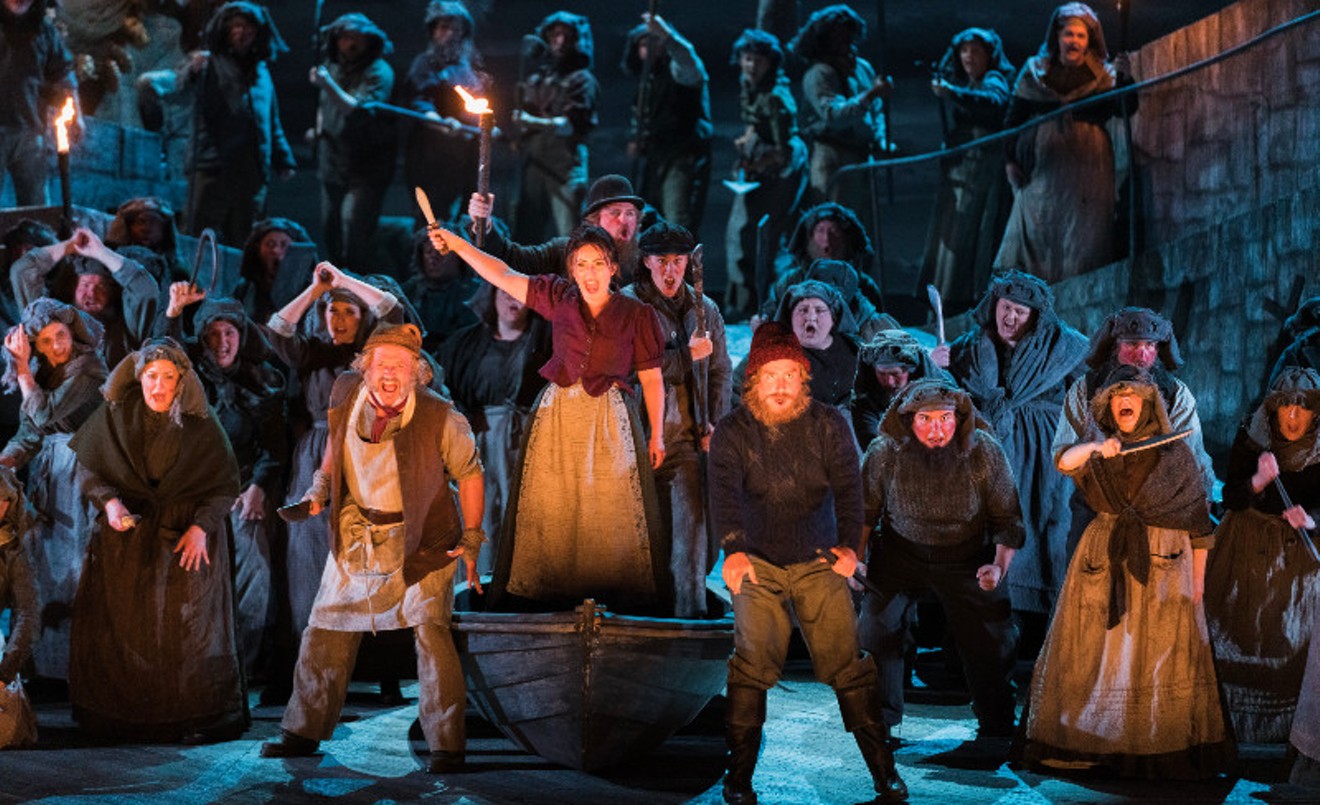
Though her most famous opera is The Wreckers, her Der Wald was the first opera composed by a woman performed at the Metropolitan Opera in New York. Smyth conducted the historic performance, which occurred in 1903. Der Wald is also, to date, the only opera written by a woman to be heard at the MET.  You can read the NYTimes review here.

Though I wasn’t able to find an accessible recording from Der Wald, here is the overture from The Wreckers:

But, as I mentioned above – Smyth was also very politically active, taking a lead role in the women’s suffrage movement, joining the Women’s Social and Political Union, a radical group. She also wrote the anthem for the movement, The March of the Women. When she was imprisoned for two months at Holloway Prison for breaking the windows of anti-suffrage politicians, Smyth was reportedly seen leaning from the window and conducting her suffragettes with her toothbrush. (You can read more about that account here).

The video below includes the lyrics – so feel free to sing along!