Women's Philharmonic Advocacy
facebook

NPR’s “Biggest Badass Composers”

by sarah - July 6, 2011

NPR’s Deceptive Cadence picked up on a twitter feed recently questioning which composer is the “biggest badass”, with qualifications to include drugs, sex, guts and politics.

The list of composers included (surprise!!!) no women. Though the list, which was compiled here, did include Carlo Gesualdo, a late Renaissance composer who is remembered for his madrigals, chromaticism, and having murdered his wife and her lover and placing their bodies on display. (Interesting that instead of being remembered as a murderer he is praised as being “badass”…)

But this omission of women must have been an oversight – especially considering all of the badass women composers that have lived. My short list includes:

Hildegard von Bingen (who was included in the comments on the NPR story – thanks to Christine Beard)
She was an abbess, mystic and prophet who stood up to every authority in the Medieval Church, including the Pope himself, and lived to tell about it. She was also the first composer to so fastidiously document their work and sign their name to it – unheard of for even men at the time.

Dame Ethel Smyth
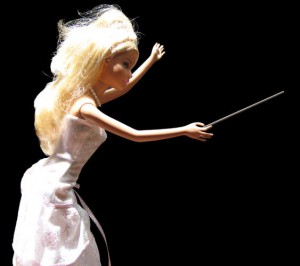
How much more badass can you get than being arrested for the cause you are fighting for (British women’s suffrage) – and continue to lead your followers even from behind prison bars? (Who doesn’t know the story of Smyth conducing her “March for Woman” from her cell window with a toothbrush??)

Nadia Boulanger
Forced to work at a young age due to the death of her father, Nadia took on jobs performing and teaching music to support her family. She took on the Prix de Rome by force and ruffled feathers along the way. Though she didn’t win (second place isn’t shabby either), she certainly paved the way for other women, including sister Lili. Nadia was also the first woman to conduct the BBC Symphony, Boston Symphony, the New York Philharmonic, and the Philadelphia Orchestra. Her students included Aaron Copland and Astor Piazzola, and seemingly countless others, and her work continues to live on through the next generations.

Wendy Carlos
Wendy’s work with the Moog synthesizer, most notably her album Switched-On Bach re-introduced classical music to the masses. That album, first released in 1968, was one of the first classical LPs to sell 500,000 copies – eventually going gold and platinum. The album also brought home three Grammy awards: Album of the Year (Classical), Best Classical Performance, and Best Engineered Recording (Classical).

Clara Wieck Schumann
A child prodigy who defied her father to marry Robert, Clara also completely changed the format and standard repertoire of piano recitals. She took care of an often-ailing Robert and raised seven children while traveling and performing to make sure that they and continuing to travel and perform to share Robert’s music and bring home a paycheck. She out lived four of her eight children (one died in infancy) as well as her husband, and cared for her grandchildren when necessary. She continued to advocate for Robert’s works, including taking the lead roles of editor and interpreter until her death.

But this is just five of certainly dozens of women composers and musicians who fought the odds and managed to make a place in history for themselves (even if it is often forgotten in text books and in online polls).

Who else should be on this list???

Barbie at the Symphony

by sarah - December 1, 2010

Some say that Mattel’s much loved and much hated doll will help save the symphony orchestra. By some I mean Arnie Roth: conductor, violinist, and award winning composer for no less than ten straight-to-DVD movies featuring Barbie in classic stories or ballets which encourage an appreciation for western art music. (His IMDB page is here.)

from: http://www.thestar.com/entertainment/music/article/895614--can-barbie-save-the-symphony

Soon after the success of the movies, which are available in 30 languages and sold worldwide, Roth developed a “live show” for children and families. Apparently Barbie has been touring with Roth since 2007, and gave a concert in Toronto with the Kitchener-Waterloo Symphony Orchestra. John Terauds, music critic with The Star wrote about the concert here.

The show, titled Barbie at the Symphony, is, “a 90-minute showcase of singing, dancing, painting and skating drawn from the DVDs”. As you can well imagine, all of the music included in the program is written by dead white men.

In the article by Terauds, Roth does make an excellent point in the need to continue to provide opportunities to increase the opportunities for children to be exposed to classical music, and there is nothing quite like sitting in a concert hall with a full orchestra onstage. Though well intentioned, I have some questions and problems with including such a problematic figure as Barbie. Certainly there is another figure from children’s popular culture that would be more universally appealing. How many young boys are being turned off of classical music because of their knee-jerk reactions to oppose anything that is inherently associated with femininity?
Thoughts?

US Release of Vision: From the Life of Hildegard von Bingen

by sarah - October 1, 2010

As I mentioned during her Feast Day, Hildegard of Bingen is clearly one of the most extraordinary women in history, if not the most extraordinary.  Her achievements, including standing up to and even actively challenging The Church, and recording her visions and music, would be remarkable for any person of her time, let alone a woman.  Thankfully, her contributions are readily being recognized – composers have actively re-set her texts, and her chants have been recorded by a contemporary Swedish electronic ensemble (check out Garmarna – they have clips on their website).

Last year German filmmaker Margarethe von Trotta released a new film about Hildegard’s life.  Vision: From the Life of Hildegard von Bingen was only available in Germany, until now!

The film is opening in New York City on October 13, in Philadelphia on October 22, Los Angeles, Boston, Chicago and Minneapolis on November 5, and San Francisco and Washington DC on November 12.  You can see more dates on the film website.

I am very anxious to see this film and how it portrays the amazing life and work of my favorite historical figure.  Though I’m sure that there will be at least a few conflicts in historical accuracy, and how could there not be, I will be thrilled if only to see the medieval cloisters that they used to film movie and recognize the effort of Margarethe von Trotta in returning to her original writings and church documents to convey the truth of the events that unfolded in Hildegard’s life.  I’m also envisioning the inherent camaraderie that will be present among the fellow theater-goers!

The film’s website has far more information about the movie, including a detailed history of Hildegard’s life, with a timeline, as well as why this topic was of such importance to the filmmaker.

Discussion on NPR

by sarah - November 28, 2008

In honor of the Thanksgiving holiday, NPR music commentator Miles Hoffman did a report on musical families for Morning Edition. The light piece, lasting about seven minutes, discussed the work of a few of the best known (or “most likely to be known”) women that were connected to the now seemingly legendary men.

Among the relatives mentioned were Maria Anna Mozart (who Wolfgang called Nannerl), Fanny Mendelssohn, and Clara Schumann. I found it unfortunate that in the discussion of the Bach family the only mention of Bach’s wives was the birth of twenty children – there was no reference to the musicianship or compositions of Anna Magdalena.

Fanny Mendelssohn’s Character Piece No. 2 for Piano and Clara Schumann’s Piano Trio in G Minor – Allegro Moderato were both heard in part during the broadcast, which can be heard here.

The seven minutes of light conversation did briefly address some of the obstacles that Fanny Mendelssohn faced as a composer from her family and the larger society, as well as the virtuosic abilities of Maria Anna Mozart and Clara Schumann. What they did not recognize was that this was the tip of a very large iceberg…

I also find it unfortunate that these talented women continue to be recognized primarily by their connection to more famous and (unfortunately) more respected men. I personally feel that the story, which was intended to be a fluff piece for the holiday, treated the few women mentioned as oddities, refusing to recognize the tradition and talent that continues to this day. But perhaps I am taking all of this a bit too personally – have a listen for yourself!

When Classical Music Meets Reality TV

by sarah - September 18, 2008

I suppose it was only a matter of time before television directors, perhaps desperate for a new idea, attempted an unorthodox and possibly fatal combination: classical music and popular culture. Enter Maestro, a British reality program that challenges celebrities to become orchestral conductors. The eight competitors included broadcaster Peter Snow, hip hop star Goldie, actress Jane Asher, actor David Soul and bassist for the band Blur, Alex James.


The show maintained a standard reality-show format. Each competitor had a mentor, practiced diligently, and was judged by experts, who included Sir Roger Norrington. I am, quite honestly, amazed at the popularity and success of the show, which first aired in early August and just broadcast its finale on Sept. 13 on BBC2. However, I do not believe that it is a show that American broadcasting companies are likely to suggest in the near future. However, far more interesting than its existence was the diligence that seemed to have been taken in the structure of the program. Unbelievably, the historic precedent of gendered bias that has pervaded the field of conducting was seemingly broken.

Of the eight celebrities competing for the prize (to lead the BBC Concert Orchestra at the Last Night of the Proms), there were three women. Thought not a perfect ratio, certainly, we must also recognize that two of the four judges were also women. (Simone Young, Music Director and General Manager of the State Opera Hamburg and Music Director of the Philharmonic State Orchestra Hamburg, and Zoe Martlew, cellist, composer, and performance artist.) The producers even demonstrated their effort by including two women in the group of eight mentors that the celebrities worked with throughout the competition. However, it can be duly noted that most of the pieces performed were written by dead, white men (except for some of the pieces from the film music episode that were written by still living, white men).

The impact of the show appeared to be far-reaching (at least with what I have been able to tell via the Internet), including dialogue about the lack of presence of women conductors. British conductor Madeleine Lovell, who prepared the BBC Symphony Chorus for an episode of Maestro, published a commentary in the Independent. Charlotte Higgins, blogger for the Guardian, also posted her commentary about the program, and invited readers to add their own thoughts via comments.

With all of the public conversation about the place of classical women in popular television, and the place of women in classical music at all, I think the best part was the winner: writer, comedian Sue Perkins. Ms. Perkins conducted Elgar’s Pomp and Circumstance, led soprano Lesley Garrett in “Merce dilette amiche” from Verdi’s The Sicilian Vespers and “The Impossible Dream” from The Man of La Mancha during the Sept. 13 finale. It makes me wonder as to how many other women have had the honor to conduct the BBC Concert Orchestra, but I haven’t been able to find a complete history yet.

Though it doesn’t surprise me that I did not learn of the program until long after its completion, I am very sorry to have missed it, and to have missed living through it as it was happening in the UK – if only to overhear water-cooler conversation. (Imagine what the conversations would have been like if the controversy about the appointment of Marin Alsop to the Baltimore Orchestra was broadcast during prime time!) The show website is still up and running, though viewers from outside of the UK cannot access the videos. But, thanks to the wonders of YouTube, you can still see some clips. Here’s one of Sue Perkins in action with the Bruch Violin Concerto:


And (one of my favorites) conducting the theme from The Simpsons:


Considering the success, perhaps we should keep our eyes and ears open for a second season next year. Till then, I’ll work on some brilliant ideas to convince the bigwigs on this side of the pond that American audiences are ready for its own version of Maestro, with a similar awareness to bridging the still all-too-present gender divide.