Women's Philharmonic Advocacy
facebook

Music by Florence Price Featured by the Chicago Symphony and Others.

A Conversation with Conductor Mei-Ann Chen

by Liane Curtis - May 13, 2013

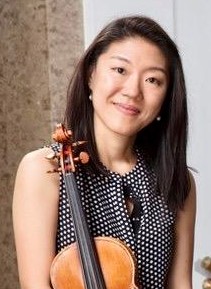
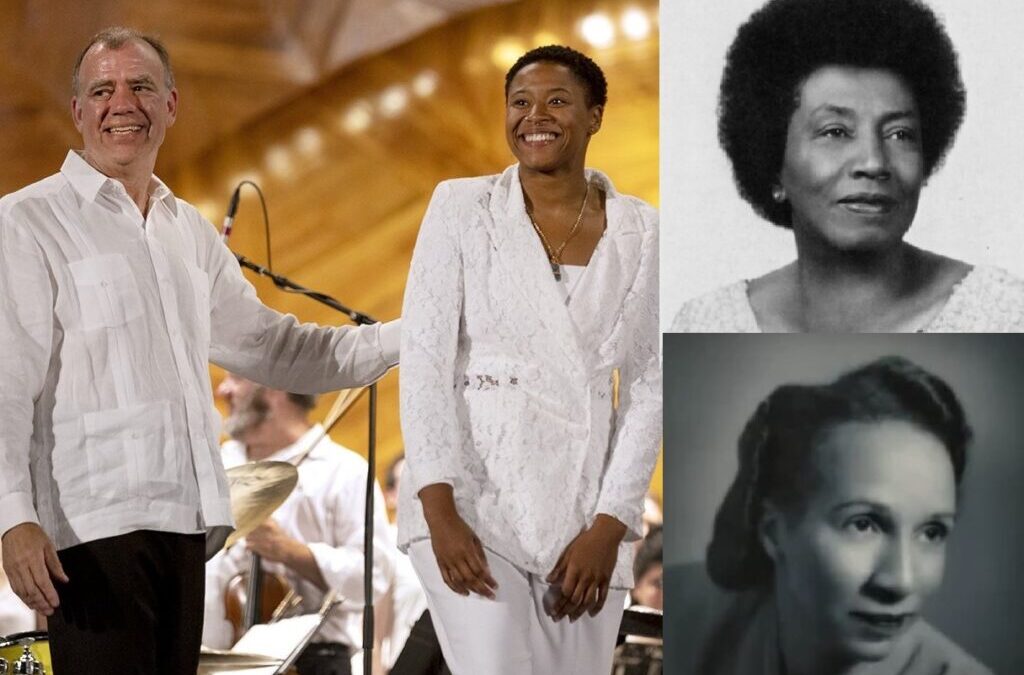
Mei-Ann Chen is Music Director of the Memphis Symphony and the Chicago Sinfonietta.  Earlier this year she guest-conducted with the San Diego Symphony, and on May 9 she made her subscription debut with the Chicago Symphony.  This is four orchestras and their audiences to whom she has introduced the music of Florence Price.

A few weeks ago she was kind enough to take a few moments from her busy schedule and talk with me about how this all came about.

Liane Curtis:  I just recently discovered what you are doing when I saw they were going to play the “Mississippi River” Suite in Chicago. So I want to ask you about her, about Florence Price.

MEI-ANN CHEN:  I have to admit I didn’t know much of Florence Price’s music before Martha Gilmer of the Chicago Symphony approached me with her Mississippi River.  Martha has been the Vice President for Artistic Planning and Audience Development with the Chicago Symphony for a long time, and obviously Florence Price being very special to Chicago Symphony’s history, I think she has been waiting for the right conductor to come along.  …  It will kick off the Rivers Festival that was sugested by Yo-Yo Ma.  Yo-Yo has an official role as a Creative Consultant with the Chicago Symphony now.

Martha has been following my career because she has family from Memphis…her family there has been sort of the ‘spy’ [laughs] for Martha and what’s happening with Memphis.  And one thing led to another.  So when Martha approached me and said “how would you like to do this piece?”  I said “Oh my gosh, I totally don’t know this composer.” …

I just read the blog that you have—it’s wonderful that you are continuing to advocate for women composers.  So, this year, as you know I have done “The Oak” [also by Florence Price] with Chicago Sinfonietta, and there’s one more piece that I’d like to mention because it’s a hidden jewel.  We had to change one of the programs in Memphis … so I thought it would be a nice opportunity to find another piece by Florence Price for our audience to learn about her work in preparation for the Mississippi River that we’re doing to end our Masterworks season.

And so I found another piece by Florence Price, I don’t know if you know, it was originally written for piano, called “Dances in the Canebrakes.”  William Grant Still orchestrated it for her, even though she knew how to write for orchestra, but I don’t know, maybe they were such good friends that William Grant Still thought this piece really deserved an orchestral treatment. It’s so delightful!  But I can tell you when we got the parts from the publisher our librarian was a little bit horrified … It just looked like it hasn’t really been performed with an orchestra.  So we actually got permission from the publisher to create a set [of parts] that our musicians can use.  That way the publisher could continue to use this very well-made set for other orchestras.

So I’m going to do that again with Chicago Sinfonietta coming up in June for our Annual Ball, which is the largest fundraising event for the Sinfonietta … a lot of African-American community leaders will be attending.  And in the same concert we will also be previewing our next season in which we will be doing the last two movements of Florence Price’s Symphony in E, which is Symphony No. 1; it was premiered by the Chicago Symphony in 1933.

LC:  Great!  That’s good to know! So you’re doing “Dances in the Canebrakes” in Memphis?

CHEN:  We just did it in January.  And I will be doing it also with the Chicago Sinfonietta coming up in June.  And they’re such delightful pieces, and really orchestrated well, but nobody knows!  We’re also trying to spread the word to other orchestras. It might be wonderful for people to consider programming it.

LC:  I know you did some Florence Price in San Diego because I sold a lot of CDs there [The Women’s Philharmonic CDs that we sell on our website]. 

CHEN:  Oh, wonderful!  Yes, I did Mississippi River in San Diego in February this year.  I’m scared to do anything for the first time in front of the Chicago Symphony.  And so it was actually a wonderful thing that San Diego had this response when I pitched it, they said “Sure, why don’t we do it here!”  And I have to tell you the librarian there, Courtney [Cohen] was so wonderful because she compiled a 10-page errata list for the piece.  You might be able to help us to solve this mystery, because it’s been recorded by The Women’s Philharmonic, so there must be a good set somewhere where all the wrong notes were caught…because the recording has the correct pitches compared to the many misprints in the parts she received for the San Diego program.   Courtney said she couldn’t find that set used by the recording used for the recording, so she actually had to start from a brand new set.  But the wonderful thing is this 10-page errata list compiled by Courtney will go on to the Chicago Symphony for my next performances in May and to Memphis as well; it will save a lot of rehearsal time for both—and future—orchestras.

LC: The thing about The Women’s Philharmonic, when they shut down in 2004, there’s been a dispersal of their collection and their knowledge.

CHEN:  I see.  Hopefully now the piece can become mainstream and at least we have done a lot of the footwork, the hard work for it, that will make it easier for other orchestras to do it now.

LC:  Just on another subject, I know that you’re traveling so much and you go back and forth between Chicago and Memphis?

CHEN: Right. Because I’m Music Director to both Memphis Symphony and the Chicago Sinfonietta, (the latter being the most diverse orchestra in the country, founded to promote minority musicians of all kinds).  The Chicago Sinfonietta is unique with its mission.  Soloists, conductor, musicians…and it was very specific when Maestro [Paul] Freeman founded it, to promote African-American musicians and Latino musicians, so my appointment as Maestro Freeman’s successor surprised a lot of people.   However, being in such a diverse world, it’s a goal for us to embrace  more of a global diversity.  But I think Maestro Freeman has also been promoting women composers and so it’s neat that even though Florence Price was probably not a composer whose music he had come in contact with, it fits nicely in terms of in my Chicago Symphony debut that I’m able to champion for an African-American woman composer.

LC:  Great.  Wonderful.  So are both cities home for you now? 

CHEN:  Yes, Memphis is larger in budget size and so the longer season requires more of my residency.  I spend 18 weeks in Memphis, and 12 of the 18 are conducting weeks.  Now, in Chicago I spend eight to ten weeks a year and I consider myself also a Chicagoan.  Our Sinfonietta season is a lot smaller in size.  I conduct four concerts with the Chicago Sinfonietta, but there are other projects.  For example we have a program called Project Inclusion, which is about to really gain national recognition from major foundations. It’s probably the only program that creates opportunity not only in small ensembles but also in side-by-side opportunity for music students who haven’t yet garnered enough experience to land a professional position in either an orchestra or a teaching position.

And so it’s really a small orchestra, but with mighty impact in the industry.  For example, the Grant Park Festival Orchestra, which is quite well known, serves the Chicago Millennium Park with free concerts in the summer. We are going to begin a partnership as part of our Project Inclusion; participants will be playing side-by-side with their professional musicians this upcoming summer season.   And so we are hoping to use my professional network, and our wonderful Executive Director Jim Hirsch’s professional network, to pitch a similar concept to other professional orchestras to encourage more presence of minority musicians among the symphonic world in our country, and to also encourage those …who don’t really grow up with classical music—it’s so important that they get exposed to it as much as possible.

LC:  That’s fantastic! 

CHEN:  And I hope you will include “Dances in the Canebrakes” on your blog because they’re really delightful pieces.  There’s a recording of the piano version but there is no commercial recording yet available of the orchestra version.  My first commercial disc is coming out very soon, featuring the Harlem Quartet [and the Chicago Sinfonietta], with one world premiere and pieces that are out of print.  I already told Jim Hirsch my hope for the next recording project: to include Florence Price, at least the “Dances in the Canebrakes” for sure.

LC:  Oh great, fantastic.  Excellent!  I’ll look forward to that and thank you so much again. 

CHEN:  Thank you for all you’re doing to advocate for women composers!

[And thanks to Susan Brown for her help in transcribing this interview.]

Making Waves with the Mississippi River Suite: Mei Ann Chen Brings Florence Price’s Music to Chicago Symphony

by Liane Curtis - May 11, 2013

Acclaimed conductor Mei-Ann Chen is just completing her first year as Music Director of the Chicago Sinfonietta.  And Thursday she made her debut as a guest conductor of the Chicago Symphony Orchestra‘s subscription series.  She made quite a  ”splash” with Florence Price’s Mississippi River Suite—the press has been filled with praise for the inspired leadership she brings to this work.

The Chicago Tribune’s John von Rhein enthuses that “Chen clearly believes in the musical merits of ‘Mississippi River,’ and she succeeded in transferring her admiration to the orchestra”—and the audiences as well!  Dating from 1934, ” the suite is attractive, tuneful, nostalgic, cannily scored, direct of expression,”  and and example of   “unabashed populism.”   “Is a Florence Price renaissance upon us?”  asks von Rheim.  Clearly the answer is “yes,” if we follow Chen’s activities—she led the San Diego Symphony in the Mississippi River Suite in February, and will bring the work to her Memphis Symphony next weekend.  She already performed Price’s “Dances in the Canebreaks” (as orchestrated by Price’s friend William Grant Still) in January in Memphis, and will bring it to the Chicago Sinfonietta on June 1.

Describing the Mississippi River Suite, Wynne Delacoma  (writing in the Chicago Classical Review) was moved to write in detail:

 In the last movement, solo instruments came and went like musicians heard on a nearby shore, a moody trumpet or glowing horn or ardent cello playing snatches of such spirituals as Nobody Knows the Trouble I’ve Seen and Go Down, Moses. Spiced with bits from popular songs of the 1900s, the musical layers came together in a jaunty mashup. But in the closing bars the river once again smoothed out into a gently flowing undercurrent and the call of a lonely harp.  …  The concert was an auspicious CSO subscription concert debut for Chen … With luck, we’ll see her again on the CSO podium.

And with luck, more ensembles will be bringing Florence Price’s music to life!
 

The Philadelphia Orchestra Announces 2013-2014 Season

by sarah - February 25, 2013

The Philadelphia Orchestra is getting back on its feet after several rough years—including declaring and working out of bankruptcy, and finding a new conductor. After seeing the great work commenced in Rochester by recently-appointed Music Director Arild Remmereit, I was intrigued to see how Philadelphia’s new conductor, Yannick Nézet-Séguin, a youthful but experienced musician, would advance the programming of the ensemble at this critical point in its history. It was, and is, a fantastic opportunity to attract new audiences by expanding its scope and repertoire.

Unfortunately, there were no surprises in his first season (2012-2013), and the recently announced 2013-2014 season is just as lacking in diverse programming. You can once again expect lots of Mozart, Beethoven, Tchaikovsky, and Strauss, a spattering of new music by familiar names (Tan Dun, Nico Muhly), and no works by women.

David Patrick Stearns, of the Philadelphia Inquirer, spoke to Nézet-Séguin about the season—but the title of the article, “Orchestral Innovations,” seems to be rather ill-fitting. What is so innovative about the Philadelphia Orchestra performing works by an overwhelming number of dead, white men? No—innovation was what the audiences of Rochester experienced in the past season-and-a-half. Innovation is daring to break the molds and the societal expectations and unwritten rules of classical music programming, challenging listeners to expand their horizons and giving under-performed music a chance to be heard and appreciated, and to inspire others. And, while performing works by contemporary composers is quite the innovation for the Philadelphia Orchestra, to include only works by old favorites and not any new voices is playing it too safe.

With the hundreds (thousands?) of under-performed or un-performed works lying in wait for their chance to be heard, how can an all-Mozart program (to take place over the course of three days, no less!) or the pairing of Strauss with Dvořák be seen as “innovative”?

The Philadelphia Orchestra’s season preview is the first of many other season releases to come, from large and small ensembles. I can only hope that more ensembles will be willing to take the risks that the RPO did—and also reap the rewards of truly innovative programming. Though I’m sure more than a few will follow the current status quo. Case in point:  the New York Philharmonic has, like the Philadelphia Orchestra, planned another season of status quo, and no representation of the works by women.

A Few Words on the RPO

by sarah - February 5, 2013

The Rochester Philharmonic Orchestra has been making headline after headline as of late—and not for the same reasons that it did just a year or so ago. The orchestra that was only months ago presented with the first Amy Award for programming excellence has now fired the Music Director that made the award possible. The situation surrounding the termination of conductor Arild Remmereit is becoming increasingly complicated and frustrating for the RPO musicians and Remmereit’s supporters.

While I am not qualified to speak directly to the circumstances, and the extremely divided viewpoints on the matter, I do have a great concern regarding the future programming of the RPO.

Maestro Remmereit’s programming choices made a significant impact for Rochester and the larger classical music community, even with his extremely abbreviated tenure.  A recent editorial in the Democrat and Chronicle spoke to the difficult situation that now exists in Rochester, and acknowledged among Remmereit’s achievements the inclusion of work by women and minority artists. In fact, his programming choices were so innovative as to warrant an invitation for the RPO to performing during the 2014 Spring For Music festival at Carnegie Hall. The original press release proudly announced that their performance, scheduled for May 7, 2014, would include Amy Beach’s Gaelic Symphony and other works by women composers. It seemed only logical that RPO would perform Beach at Carnegie Hall—the honor of participation came as a result of their adventurous and innovative programming. In other words: because Remmereit dared to feature under-performed works by women composers.

Imagine my surprise when I read in a press release from January that the RPO has changed their repertoire for the Spring For Music festival – instead of presenting the rich concert of works by women, the RPO, under the direction of Michael Christie, will perform Howard Hanson’s opera Merry Mount.

I am confused why the decision would be made to so dramatically change the programming for participation in the Spring For Music festival, particularly when the inclusion of works by women was a significant factor in the invitation to participate at all.

Regardless as to the personal and/or political factors of the recent dismissal, the RPO Board is gravely remiss to not acknowledge the positive developments in programming and engagement that have resulted from Remmereit’s vision. They were happy to acknowledge the ASCAP Award for Adventurous Programming (due in part to including works by Karen Tanaka and Margaret Brouwer), as well as the Amy Award from Women’s Philharmonic Advocacy. Why suddenly ignore and dismiss the progress that has been made and the national recognition that has been garnered from diverse programming?

Higdon-and-Beau

Jennifer Higdon (photo credit Candace di Carlo)

Jennifer Higdon’s piece “Machine” was recently included in an RPO concert.   The program was originally meant to also include a work by Margaret Brouwer, which the management cut for budgetary reasons.  Having two works by women on one program was another example of Remmereit’s visionary decisions.  My colleague Liane Curtis mentioned the situation to Higdon, and Higdon observed:

Maestro Remmereit looks like an incredibly inventive programmer of fascinating concerts. These are the kind of concerts I dream about being able to attend. (email, Jan. 25, 2013)

I second her opinion. It would be a terrible turn of events if the RPO Board, and every orchestra Board, didn’t recognize the value of innovative and diverse programming and build on the past RPO successes. Instead, I fear, they will be advocating for more of the all too familiar, with the result that  those innovative concerts that we’ve been dreaming will go unheard.

Beach’s Concerto Comes to Life!

by Liane Curtis - November 15, 2012

It’s one thing to know a piece from recordings and quite another to hear it come to life in the fluid process of rehearsal, with the 100 or so musicians involved in the give and take, the learning process of  bringing an unknown work to life—I was very privileged to hear this morning’s rehearsal of Amy Beach’s Piano Concerto!  Saet Byeol Kim is absolutely brilliant as the soloist in this virtuosic  work that Amy Beach composed to showcase her own formidable skills at the piano. For those of you who are attending the RPO’s performance  (Nov. 15 and 17), I thought I would provide here the poems of the three songs that Beach drew on for themes. These are her own songs that she wrote around the time of her marriage, and then returned to more or less 15 years later to use these rich melodies in the larger, monumental context of  the Concerto.

Jeune fille et jeune fleur   (1832) by François-René, Vicomte de Chateaubriand 
Beach, Four Songs, Op. 1, no. 3     Translation from The World’s Best Poetry  (J.D. Morris & Co., 1904)  [original French below]
 
The bier descends, the spotless roses too, 
 The father’s tribute in his saddest hour:
O Earth! that bore them both, thou hast thy due,—
The fair young girl and flower. 

Give them not back unto a world again,
Where mourning, grief, and agony have power,—
Where winds destroy, and suns malignant reign,—
That fair young girl and flower. 

Lightly thou sleepest, young Eliza, now,
Nor fear’st the burning heat, nor chilling shower;
They both have perished in their morning glow,—
The fair young girl and flower. 

But he, thy sire, whose furrowed brow is pale,
Bends, lost in sorrow, o’er thy funeral bower,
And Time the old oak’s roots doth now assail,
O fair young girl and flower! 

* * * **** * * * * * * **** * * *

Il descend ce cercueil, et les roses sans taches
Qu’un père y déposa, tribut de sa douleur,
Terre, tu les portas, et maintenant tu caches
Jeune fille et jeune fleur.
 
Ah! ne les rends jamais à ce monde profane,
A ce monde de deuil, d’angoisse et de malheurs.
Le vent brise et flétrit, le soleil brûle et fane
Jeune fille et jeune fleur.
 
Tu dors, pauvre Elisa, si légère d’années,
Tu ne crains plus du jour le poids et la chaleur:
Elles ont achevé leurs fraîches matinées,
Jeune fille et jeune fleur.
 
Mais ton père, Elisa, sur ta cendre s’incline:
Aux rides de son front a monté la pâleur,
Et vieux chêne, le temps fauche sur sa racine,
Jeune fille et jeune fleur.


Empress of Night   (Dr. H.H.A. Beach)

Amy Beach, Three Songs, Op. 2, no. 3  (1887)

Out of the darkness,
Radiant with light,
Shineth her Brightness,
Empress of Night.

As granules of gold,
From her lofty height,
Or cataract bold
(Amazing sight!)

Falleth her jewels
On ev’ry side,
Lighting the joybells,
Of Christmastide.

Piercing the treeboughs
That wave in the breeze,
Painting their shadows
Among dead leaves;

Kissing the sea foam
That flies in the air,
When tossed from its home
In waves so fair;

Silv’ring all clouds
That darken her way,
As she lifts the shrouds,
Of breaking day.


Twilight   (Dr. H.H.A. Beach)

Beach, Three Songs, Op. 2, no. 1

No sun to warm
The darkening cloud of mist,
But everywhere
The steamy earth sends up
A veil of gray and damp
To kiss the green and tender leaves
And leave its cool imprint
In limpid pearls of dew

The blackened trunks and boughs
In ghostly silhouette
Mark grimly in the coming eve
The shadows of the past. All sounds are stilled,
The birds have hushed themselves to rest
And night comes fast, to drop her pall
Till morn brings life to all.

Repertoire Statistics Report—2009-2010

by sarah - July 31, 2012

Every year the League of American Orchestras releases statistics on the repertoire that is performed by member ensembles. The information is collected and painstakingly compiled so that arts administrators, musicians, and academics can take notice of trends and changes in the music being heard on American soil.

As with most arts organizations over the past several years, the League has faced some cutbacks and has been a bit behind on their repertoire reports. But the happy news is that the 2009-2010 season reports have recently been made available to the public (available here).

As in the past, (you can see my past reports on these statistics here and here) I went through the report to see exactly where music by women composers was being heard; the numbers, unfortunately, were not terribly surprising. But there was some good news, too.

It should be understood that these figures are not perfect—I was only able to work with the information that was provided, which was somewhat incomplete. For example, no repertoire was reported from Atlanta, Buffalo, Detroit, Houston, National, Rochester, San Francisco, and St. Louis symphonies, among others. But, this data is still valuable and worth consideration.

  • Of the 6,249 performances, there were 45 performances of works by women composers – about  0.7% (*Note: these figures include every reported performance of every work, including repeat performances)
  • Of the 1,671 pieces that were performed, there were 39 pieces composed by women – 2%
  • Of the 490 composers represented, 29 were women – 6%
  • Of the 29 composers, only one was born before 1850 – Francesca Caccini.
  • Out of 137 orchestras, 30 performed works by women – 22%
  • Of those 30 orchestras, 3 were youth orchestras.

For some perspective, there were 457 scheduled performances of works by Beethoven (7% of the total works performed compared to the 0.7% of works by women).

There were 47 performances of Beethoven’s Symphony No. 9 alone.
The good news is the number of premieres of works by women during the 2009-2010 season.

US Premieres included:

  • Unsuk Chin’s Concerto, Sheng and Orchestra, Su
  • Augusta Read Thomas’s Helios Choros II

World Premieres included:

  • Margaret Brouwer’s Concerto, Viola
  • Gabrielle Haigh’s Poeme-Rituel
  • Dorothy Hindman’s Urban Myths
  • Rebeca Mauleon’s Suite Afro-Cubano
  • Missy Mazzoli’s These Worlds in Us
  • Amy Scurria’s What the Soul Remembers
  • Wendy Snellen’s Suite de Musica de Guitarra Para Orquesta
  • Stella Sung’s The Frog and the Well (Chamber Version)
  • Gwyneth Walker’s By Walden Pond
  • Diane Wittry’s Lamentoso

There was a tie for the grand-prize of number of works performed by an orchestra—the American Composers Orchestra and New Haven Symphony each performed four pieces. And there were some surprises among the “top” orchestras—Boston Symphony performed Augusta Read Thomas’s Helios II, the New York Philharmonic performed two pieces by Francesca Caccini, and Chicago (which, already has a decent history of including at least a few works by women composers each season) performed two pieces by Ruth Crawford-Seeger as well as a piece by Kajia Saariaho.

As the League continues to work to publish reports from more recent years, I’ll be interested to see what developments will be seen. For example, the Rochester Philharmonic Orchestra has clearly demonstrated their commitment to performing a diverse range of the orchestral repertoire, particularly the under-performed works by women, both historic and contemporary.

More on the Presentation of the AMY Award

by Liane Curtis - June 7, 2012

It took place a week ago—the presentation of the first ever AMY Award—and what a thrill it was.  I was so honored to give the award before the full orchestra (the Rochester Philharmonic Orchestra), and the near-capacity audience (almost 2400, including the 500 violists in attendance for the International Viola Congress).  It took place just after intermission—the first half of the program was works by Margaret Brouwer and Sofia Gubaidulina (it was actually quite extraordinary to have two works by women on a single program), and after the presentation, the program concluded with Mussorgsky’s Pictures at an Exhibition.  I thought I would share the entire text of my speech:

Women’s Philharmonic Advocacy was launched four years ago with the goal of encouraging orchestras to program more works by women. We wanted to carry on part of the mission of The Women’s Philharmonic, a professional orchestra that was based in San Francisco from 1980 to 2004. Over those 24 years, they performed more than 300 works composed by women from the 17th century to the present.

Of course recent decades have seen considerable change, so we have, on the one hand, women who are among the most performed and recognized contemporary composers—but on the other hand, if you look at statistics provided by the League of American Orchestras, you find that the overall number of works composed by women is still only no more than 1.7 percent of the orchestral performance repertoire. That is a very tiny sliver of the composer pie.

So when we noticed what was happening here in Rochester, with Maestro Remmereit and the Philharmonic, we thought we had better come up with an award for this. This is what we want  to see as the new normal,  a model for orchestras across the country: to explore new new repertoire—commissions and works by living composers—and also new, old repertoire—that is, works from the past decades and centuries, the buried treasures that today’s audiences have never had  a chance to hear.

We decided to name our award the AMY Award, after Amy Beach. As you know, Beach was the first American woman to have a symphony performed. She published more than 300 works, yet—after her death, like every other female composer she was erased from the repertoire and from music history.

Last fall you had the exciting opportunity to hear Beach’s masterpiece, her Gaelic Symphony. This fall you will get to hear her Piano Concerto.  Perhaps in 2013 it will be time for her monumental Mass, a work which, despite its grandeur, has never been professionally recorded. And in 2014 maybe we will hear her Balkan Variations. And perhaps in 2015 her concert arias. And did I mention her Mass has never been recorded?

I hope you will agree that in embarking on this pathway of discovery, Maestro Remmereit  has not forced you to listen to a lot of crummy music. By introducing new works to our classical traditions—creating classics—the orchestral world will be strengthened and invigorated, and audiences will be excited by the discoveries that span continents, centuries, and genders.

Will Maestro Remmereit please come forward to accept the award.

The sculpture is by artist Rita Blitt.  It stands ½ inch taller than the Oscar statue, and we think it is much more beautiful!

On behalf of WPA, I am happy to present Maestro Remmereit and the Rochester Philharmonic Orchestra with the AMY award for excellence in orchestral programming.

Everyone was so excited by this, and Maestro Remmereit was very moved. We didn’t get any pictures, but there is this one from the reception afterwards. But I am definitely going back in the fall!

ALSO:   Our Board plans to announce the details (on June 18) of another program to encourage including more works by women to the orchestral repertoire, our WPA Performance Grants.


Xian Zhang Featured in Article on Conductors

by Liane Curtis - April 9, 2012

A New York Times article explores and explains the conductors job, how “he or she makes music’s meaning clear through body motion.”

We are happy that Xian Zhang is included as one of seven conductors interviewed in the article, and featured with a photograph as well.   The article is fascinating, but I do wonder if a bit of gender bias played out in that Zhang’s professional role is not pointed out—we don’t learn about where she works or her title. The conductors were all interviewed  ”as they passed through New York in recent seasons” and in Zhang’s case it was only mentioned that she was working with a student orchestra at Julliard. Harry Bicket also does not have any position clarified, but at least he has some description, as an early-music specialist and British.

But this only really matters in the paper version (which I read first)—online the conductors get links to their websites. Zhang has been  discussed earlier on this blog; for the record, she serves as Music Director of Orchestra Sinfonica di Milano Giuseppe Verdi and Artistic Director of the NJO / Dutch Orchestra.


Rochester PO Announces 2012-13 Season

by Liane Curtis - March 2, 2012

The Rochester Philharmonic just announced its 2012-13 Season.  In his second season, Maestro Arild Remmereit will continue the orchestra’s exploration of great works by women, both historic and contemporary.

As we mentioned in our earlier post, we are thrilled to see the orchestra making this commitment to women. Remmereit recently served as keynote speaker at the annual fundraising luncheon of the Susan B. Anthony House and Museum. Emphasizing his commitment to women composers, he stated that music “is a necessity and shouldn’t just be in the hands of very few.”  What GREAT NEWS!  Happy Women’s History Month, but also nice to think that women aren’t only for March anymore!


Florence Price on NPR

by sarah - February 28, 2012

I am always delighted to stumble upon the name of a historic woman composer in the daily news—and kudos to NPR for making my day!

Their classical music blog, Deceptive Cadence, highlighted new recordings of works by composer Florence Price (née Smith)—the first African American woman to have a symphony performed by a major American orchestra.

Included in the CD are Price’s Symphony No. 1 in E Minor, which was premiered by the Chicago Symphony in 1933, and Concerto in One Movement for piano, featuring Karen Walwyn. The CD also features the New Black Music Repertory Ensemble of Columbia College, Chicago with Leslie B. Dunner conducting.

Stop by the NPR site to hear the fourth movement of the Symphony!

You can also purchase a recording Price’s Symphony No. 3 in C Minor at the Women’s Philharmonic Advocacy shop.