Women's Philharmonic Advocacy
facebook

Honoring Margaret Bonds

by sarah - March 11, 2013

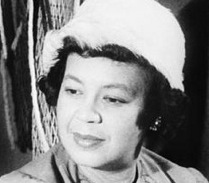
I was thrilled to hear NPR reporting on a woman composer on All Things Considered recently. Celeste Headlee spoke with Louise Toppin, opera singer and voice professor at the University of North Carolina, on the life and work of Margaret Bonds.

Bonds, who died in 1972, would have celebrated her 100th birthday on Sunday, March 3. The story recognized her work, music, and collaborations (like with poet Langston Hughes and soprano Leontyne Price), and highlighted that Bonds was one of the most recognized female African-American classical composers of her time. And, like too many other women, her work is little-known today.

MBondsAmong her accomplishments was being the first African American to perform with the Chicago Symphony (as a solo pianist during her senior year of college, no less!) She was also a student of Florence Price, who helped pave the way for women and African Americans in the classical music scene.

Last weekend a symposium was held in honor and memory of Margaret Bonds at the University of North Carolina. It was co-hosted by UNC and Videmus, a non-profit organization “committed to educational and collaborative projects on the repertoire of African Americans, women, and under-represented composers through the promotion and production of recordings, concerts, and other programs.”

Kudos to UNC and Videmus to what appears to be a fantastic weekend of shared music remembering the work of Bonds.

Be sure to listen to the whole story archived on NPR’s website which includes excellent examples of Bond’s work. But the most poignant part of the conversation happened at the very end:

HEADLEE: Describe for me that moment when you were 10 years old and your piano teacher sets a piece of music before you that’s not Bach and is not Mozart and wasn’t written by somebody from long ago or who looks nothing like you but was another dark-skinned American woman. What was that like?

TOPPIN: The fact that I can remember, it tells you the impact that it had on me. I was floored. It set me on the path to find out more about Margaret Bonds, believe it or not, as a child. So that pride and that interest in her started my path of looking for more of her stuff but also looking for women composers and recognizing that they are a rare commodity, but they have a voice in our musical culture and musical life. And she made very strong statements with the music that she wrote.

And isn’t that the point of it all? Shouldn’t more students be exposed to music as varied and diverse as they are? Though the “great masters” will always have a place in the repertoire, we cannot begin to measure the tremendous and positive impact of a young student having the opportunity to learn about and perform the works of a composer that they can relate to on a personal level. Insisting that students only learn the music of dead, white men just continues the false notion that the only “good” music was written by dead, white men.

Here is Bond’s “You Can Tell The World”:


Nancy Reich Honored with AMY Award

by Liane Curtis - September 22, 2012

Ossining, NY — Sept. 20. 2012

Nancy B. Reich (center), with Liane Curtis (right) and Judith Tick.

As President of Women’s Philharmonic Advocacy, I am proud to grant the AMY Award for Lifetime achievement in Music Scholarship to Dr. Nancy B. Reich. Her book, Clara Schumann: The Artist and the Woman (1985; rev. ed. 2001), was the first book of serious musicological scholarship devoted to a female musician. The very different scholarly landscape that surrounds us now, in which feminist scholarship and interest in women’s lives and musical creations is mainstream, is in a great part due Dr. Reich’s pioneering work.

Today Clara Schumann is both the subject of a range of scholarly inquiry as well as increasingly part of everyday discourse. For instance, witness the Google Doodle just last week—the first Doodle to honor a female musician. As a composer, Clara Schumann’s music, from her songs, piano music and chamber works, to her powerful piano concerto, are widely performed and recorded.

Reich’s subject matter was new for the field of musicology, but her research methods were solidly grounded, and the precision, detail, and discipline with which her work was carried out has led it to be widely respected and influential.

Dr. Reich has been generous and helpful to scholars from around the globe who are researching Clara Schumann and related subjects. By honoring Dr. Reich we recognize and celebrate her impact on musicology, as well as on the musical world in general.

Reich’s Clara Schumann: The Artist and the Woman, was hailed by critics as a major contribution and has been translated into German, Japanese and Chinese. In further celebration of Dr. Reich receiving the AMY Award for Lifetime Achievement in Music Scholarship, we are happy to announce that Cornell University Press, the publisher of Dr. Reich’s book, plans to reissue it in electronic format in the very near future.

Thoughts on Beauty in Classical Music

by sarah - August 23, 2011

I had been trying to put together some thoughts about the way women who perform classical music are viewed/described by the media, long before Yuja Wang made her controversial Hollywood Bowl appearance. And after sifting through dozens of articles and critiques, I have come up with at least some of what I want to say.

For those who are (perhaps blissfully) unaware of the media frenzy that has recently taken over the classical music community, Chinese pianist Yuja Wang, performed Rachmaninoff’s Third Piano concerto at the Hollywood Bowl on August 2. However, what has remained on everyone’s minds (continuing to be mentioned even 2-½ weeks later) is not her interpretation of the work, but rather what she wore.

The August 3 review in the LA Times by Mark Swed devoted a whole paragraph to the dress:

Her dress Tuesday was so short and tight that had there been any less of it, the Bowl might have been forced to restrict admission to any music lover under 18 not accompanied by an adult. Had her heels been any higher, walking, to say nothing of her sensitive pedaling, would have been unfeasible. The infernal helicopters that brazenly buzz the Bowl seemed, on this night, like long-necked paparazzi wanting a good look.

In a (follow-up article) on August 20, Swed defends his review.

For reference, here is a video of Yuja Wang (wearing a different – although equally revealing – dress) playing Scriabin:

The responses to the concert, and the review, have been plentiful:

Anne Midgette, music critic at the Washington Post, is familiar with the topic, having written a lengthy article for the New York Times in 2004 titled, “The Curse of Beauty for Serious Musicians; Young Women Find the Playing Field is Far From Level”. In recent days she, too, has contributed to the conversation regarding Wang’s dress, and criticizes LA Times reviewer Mark Swed’s take on the outfit, and speaks to larger concerns with how the classical music community is advancing and embracing change, or not.

And Amanda Ameer at Life’s A Pitch, commented on the dress, sharing her conflicted standpoint on a performer’s right to personal choice versus the expectations for a collaborative effort with the rest of the musicians. Many readers’ comments also raise excellent points on the implications of the general of beauty.

The Well-Tempered Ear is conducting a poll about what “appropriate” concert attire would look like, and rightfully addresses the differences in expectations for male and female soloists.

Adam Tschorn, also of the LA Times, shares his thoughts on the dress and the hulabaloo here.

An article in the Philadelphia Inquirer by music critic David Patrick Stearns likens Wang and her contemporaries (young soloists, like Lang Lang) as “rock stars”. Stearns believes that it is reasonable for young, talented, popular musicians to conform to the fashion of the day, but cautions that it’s going too far:

But it’s all getting so extreme, some might say classical music is turning into its own slutwalk, with artists seizing upon every possible media outlet, and looking as provocative as possible.

(Aside: Isn’t it interesting that he certainly purposefully chose that term and still misses the point, even with all the recent news coverage of slutwalks taking place across the country and around the world.)

Moreover, Stearns seems to be more concerned that fans of Wang will only be interested in attending concerts because of her attire and not her music, and then immediately calls to reference the other women that have faced scrutiny over the years

Overall, the classical world is a better place since violinist Anne Sophie Mutter began, in the mid-1980s, wearing strapless concert gowns that give her more freedom of movement, not to mention the sensual pleasure of feeling her violin close to her bare skin. Soprano Karita Mattila spends her spare time making her own form-fitting concert gowns; one could have worse hobbies. Both artists have exemplary careers with adventuresome contemporary repertoire. Also, visual desensitization set in quickly: After a few concerts, I stopped noticing what they wore and was all ears.

…and still seems to miss his own point.

***

As those of us who pay attention to these things know, it is not the first time that a critique of visual aspects of the performer took precedence over the music and its interpretation. Physical appearance has always played a role in music making – how a women presents herself physically is, and has always been, important to the society at large. There is a long history of women being prohibited from playing instruments because of how they required a woman to hold her body (think cello), or contort her face (oboe, trumpet, etc.). Instead, women were encouraged to play instruments that would enhance their feminine beauty.

When women first began to step into the spotlight in the 19th century as soloists (like Camilla Urso, for example), their attire was usually just as heavily critiqued as their performance. As Beth Abelson Macleod noted in her book Women Performing Music, many dresses were described “with an attention to detail generally reserved for bridal gowns on today’s society pages.”

And the bias that women faced in joining symphony orchestras, which was rampant in mid-late 20th century in the United States, and which continues in Europe, included commentary on physical appearance. In 1946 conductor Sir Thomas Beecham was quoted as saying,

I do not like, and never will, the association of men and women in orchestras and other instrumental combinations…. As a member of the orchestra once said to me, ‘If she is attractive I can’t play with her and if she is not I won’t.’

And he wasn’t alone. Franz Reiner, who conducted the Pittsburgh Symphony, said around 1945 that “I’ll take any man in the country before I’ll take a woman.”

The inherent bias was so troubling that blind auditions (where performers auditioned anonymously behind a curtain) were put in place in the 1960s and 1970s to allow for the possibility of merit to be the qualifying factor.

In the following decades, more women found their ways into professional orchestras, and earned success as soloists. But though expectations for appearance changed, it was never removed from the equation. Women instrumentalists have often found their attire to take up more room in their concert reviews than any thoughtful criticism of the performance. World-renowned violinist Anne-Sophie Mutter was one of the reviewers’ favorite targets in the late 1990’s. In a review that appeared on February 28, 1997, Toronto Star critic William Littler wrote:

The late English music critic Sir Neville Cardus, whose eyes were as open as his ears, used to say of the Viennese soprano Lisa della Casa that one should go to her concerts twice: once to listen, once to look. It is the kind of remark familiar as well to German violinist Anne-Sophie Mutter, she of the flowing tresses and off-the-shoulder gowns. It is a sexist remark, no doubt, for which those of us with trousers make no apology. Nature has been bounteous to such women and just a little bit cruel as well, because we can never entirely regard their artistry in isolation from their beauty.

Which brings us to the other side of this problem. Female solo performers are criticized if they choose attire that is considered too “racy”, as well as when they choose perhaps a more conservative ensemble. Lara St. John, Canadian violinist with a history of wearing un-conservative concert attire, received criticism of the latter kind from critic John Terauds in a February 13, 2004 review (also in the Toronto Star):

An almost matronly St. John shambled out on to the Jane Mallett Theatre stage in a wrinkled pigeon-coloured number that had to be one of the ugliest frocks to see stage lights this season….This violinist proved that what you look like says little about your music. Her music last night was as good as it gets. But it still might be time to buy a new dress.

(Midgette’s Times article, linked above, is written in response to this review by Terauds.)

Physical appearance in classical music continues to be an important factor for performers who seek to get ahead – particularly women. Over-sexualization of women performers is rampant, evidenced in part by the website Beauty in Music has been cataloguing “The Sexist Women in Classical Music”, which provided pictures of instrumentalists but neglects to include any names. And Norman Lebrecht at Slipped Disc had the audacity to suggest just a few months ago that EMI, having signed trumpet soloist Tine Thing Helseth, may have made an error in that they “already have a young, blonde trumpet player in Alison Blasom.” The implication, of course, being that there is only room in the classical world for one sexy trumpet player, and certainly not two, irregardless of their talent or creativity.

Men (perhaps increasingly) also face expectations and criticism – this evidenced by the listing of The Top 12 Classical Music Pinups (which includes men and women), and “breaking” stories about a composer who joined a modeling agency.

Expectations for vocalists are even more cutthroat than instrumentalists, particularly in this world of ever-enterprising, novelty-seeking and boundary-breaking operatic directors. The story of soprano Deborah Voight’s dramatic weight loss after being removed from an opera production because she couldn’t fit into a specific black cocktail dress is now infamous – and being retold by Voight, at Glimmerglass this past year as well as in an upcoming memoir. Australian opera director Lyndon Terracini has publicly and very clearly proclaimed his position in a recent article in the Sydney Morning Herald:

The fat lady has sung. And if Lyndon Terracini continues to get his way, she won’t get an encore until she at least shifts some weight.

Lest the man charged with overseeing the future of opera in Australia be accused of sexism, he is quick to point out that his shape-up-or-ship-out message applies to all performers, regardless of gender.

”If you’re seeing a couple making out and one of them is obese, who wants to watch that?” he says with a theatrical grimace. ‘‘It’s obscene. You just think, ‘Jeez, for Chrissakes, don’t let the children see that’.”

Apparently it is okay to be fat-phobic if you are not sexist about it.

There have been plenty of arguments as to why it is important to maintain the concert standards that were created decades ago – but also arguments to change the status quo. If classical music is going to thrive once again, isn’t it time to move beyond these trite and blatantly sexist criticisms, which further reinforce the patriarchy that we still can’t seem to shake? It appears more and more that talent is coming in second place to reinforcing flawed and damaging beauty standards. We expect classical musicians to look beautiful, but not be too sexy or glamorous or empowered. And if they don’t conform to what the resounding majority believes to be beautiful, then they don’t belong on the stage at all.

Performers are on stage to be seen and heard, certainly. Watching a performer engage with the music is why I attend live performances. However, I see no point in forgetting the music for the sake of being a beauty/fashion critic, other than to detract from what is more than likely amazing (and maybe threatening) talent for the sake of maintaining restrictive social standards for beauty and appearance.

Judith Tick and Ruth Crawford Seeger

by sarah - April 17, 2011

When discussing the recent history of American music, it would be remiss to not mention the name Ruth Crawford Seeger.  Her contributions as an educator to budding composers, as well as her contemporary compositions and research in folk traditions, are hugely significant not only in remembering the roots of American music, but also in moving forward in new directions.  Her accomplishments include being the first woman to win a Guggenheim fellowship in 1930, and composing the piece representing the United States in the ISCM Festival in Amsterdam in 1933.  Her career took her from being a composer of experimental and modernist works to a transcriber of folk tunes; however, it is more likely that she is remembered today as the wife of ethnomusicologist Charles Seeger and stepmother to folk singer Pete Seeger.

Thankfully, scholarship on the life and work of Crawford Seeger continues, thanks largely to the biography by Judith Tick.  More information on the biography can be found here.

During Crawford Seeger’s lifetime she worked closely with the Library of Congress in documenting the folk music of the United States.  It is only natural, then, that her papers were donated to the LOC by her family after her death.  In a wonderful partnership with the American Musicological Association, scholars are invited to the LOC to present lectures twice a year on relevant holdings.  In 2008 Tick was invited to give such a talk on Crawford Seeger which was filmed and is available to view online.  Watching the program in its entirety is ideal – but there is also a transcript available if you prefer to read instead of watch.

Francesca Caccini

by sarah - March 19, 2011

The life of Francesca Caccini (1587- after 1641) provides another example of a woman fortunate to be born into a family supportive of her musical pursuits. Caccini’s father was an accomplished musician, composer, and educator and gave his daughter every opportunity that she could have hoped for as a young woman period living in Italy in the early Baroque period. Her education and inspiration resulted in her opera La liberzione di Ruggiero, which is largely accepted as the first known opera composed by a woman.

For a significant portion of her life, Caccini was in service at the Medici court as a composer, performer, and educator. In 1614 she was reportedly the court’s highest paid musician. She composed several works for the stage beyond La liberzione di Ruggiero, but they have all been lost to time. Some of her surviving works are solos or duets for voice. After Caccini left her role as court musician in 1641 she disappeared from public record.

Suzanne G. Cusick, musicologist and professor at NYU, recently published her work on the life and music of Francesca Caccini titled, Francesca Caccini at the Medici Court: Music and the Circulation of Power . The book provides the reader a biographical history as well as an accurate account of what the role of a court musician entailed during Caccini’s lifetime.

Below is “Lasciatemi Qui Solo” for soprano and lute:

Artist Profile: Johanna Beyer

by sarah - February 24, 2011

The Performing Arts Department of the Library of Congress publishes a semi-regular blog titled In the Muse. The blog has great information featuring items that are held in D.C. and are available for perusal.

A Music Cataloger at the LOC, Laura Yust, was a recent guest-blogger and profiled Johanna Beyer (1888-1944). Please do read the full post available here. Though Beyer’s papers are at the New York Public Library (the finding aid is here), her presence can be found at the LOC through her interactions with teachers, mentors, and peers. Beyer was a student of Ruth Crawford, Charles Seeger, and Henry Cowell.

Image from: http://blogs.loc.gov/music/2011/02/johanna-beyer-a-composer-forgotten/

Yust also provided readers with a link to more resources for those interested in finding out more about this little-talked about modernist composer.

Below is a video a performance of Beyer’s Music of the Spheres (1938).

NY Philharmonic’s Archives Now Available Online

by sarah - February 7, 2011

In what I’m sure was, and continues to be, a massive undertaking, the New York Philharmonic is digitizing their archives to make available online to anyone interested. The benefit to researchers, amateur and professional alike, is truly fantastic!

The project, which is still underway, currently provides the scores, images, programs and business documents from 1943-1970. Though it does show a glaring absence of women as a whole, you are able to explore all of the correspondence surrounding Nadia Boulanger’s guest conducting appearance in 1962, where the orchestra performed three works by Lili Boulanger: Psalm 130; Psalm 129; and Psalm 24. You can also see the full program – an image of which I included below.

As the project continues, the public will next gain free online access to the first documents associated with the NY Phil after it was established in 1842. You can learn more about the project as a whole in the video below.

Remembering Fanny Mendelssohn Hensel

by sarah - September 27, 2010

The most recent work by R. Larry Todd, one of the foremost scholars of the Mendelssohn family, turns the attention away from Felix and to his older sister, Fanny.  The book, entitled Fanny Hensel – The Other Mendelssohn pays credit to the all too often neglected life and musical achievements of a woman who faced more than her share of obstacles.

As a result of her social class and the cultural expectations that followed, Fanny was largely prevented from fulfilling her desires of creating and performing.  And we can only imagine what it was like for Fanny to watch her brother achieve and excel while she was prevented from being heard.  As a 14 year-old Fanny was told by her father that,

“Music will perhaps become his [Felix’s] profession, but for you it can and must only be an ornament, never the root of your being and doing.”

And to reinforce the point, at 23 she was gain reminded by her father,

“You must become more steady and collected, and prepare more earnestly and eagerly for your calling, the only calling of a young woman – I mean the state of a housewife.”

Though scholarly work on Fanny has been done before, this is the first definitive biography and I am eager to add it to my library.  The book also has a companion website that includes audio clips of several of her pieces.  You can also learn more about the book and Fanny’s life through an article through Classical Minnesota Public Radio, where they also offer a podcast of an interview with the author.

In tribute to this relatively recent release, the Julliard School will be presenting a mini-festival honoring the works of Fanny Mendelssohn.  The Julliard Journal online explains that Dr. Todd is working with the performers to make it a true, “fusion of scholarship and performance.”  The festival, which runs from September 30 to October 2, will include lieder, solo piano pieces, piano duets, her Piano Trio in D Minor, op. 11, String Quartet in E-flat Major, and Das Jahr, a 12 movement cycle for solo piano representing the months of the year.

As Dr. Todd recognizes, “There is the spark of genius in this music, making her as a composer we should now recognize and celebrate.”  Though I believe we should have been recognizing and celebrating her all along, I suppose it’s never too late to start.

For more information about the festival or tickets, you can follow this link.

Being Heard: A Look at Orchestral Repertoire

by sarah - September 17, 2009
As we are getting settled into a new concert season and all the anticipated performances, particularly of work by women composers, it’s also a good time to look back on the historical precedent of American ensembles performing works composed by women.

I. Where to Begin
I am sure that it is no surprise that there is a noticeable lack of performances of works by women composers in the modern programming of American orchestras. In the same respect, none of us can deny the hard work and tremendous forward strides that have been painstakingly made in recent decades to create an environment where women’s music is heard even occasionally on symphony stages. The various roles that women have taken in the creation, performance, and reception of music are now in the consciousness of far more students and scholars than what there were even ten or fifteen years ago – and for that, we can be glad. Music scholars, students and enthusiasts are familiar with some, if very few, names of women composers, performers or conductors who have made such an amazing place for themselves in history that they are known to audiences if not present in academic circles. More and more attention, if not recognition, is being paid even by the general public on the role of women in orchestral music. But as women increasingly win top seats in top orchestras throughout the country, and fewer patrons are aghast to see a woman conductor standing at the podium, the opportunities to hear works by women are still rare.


As I became involved with Women’s Philharmonic Advocacy I wanted to determine for myself what the current programming of today’s American orchestras suggested in the reception and recognition of music by women. I will here add a note (and disclaimer) to state that my enthusiasm to advocate for the works composed by women is not done blindly. To say that works by women need to be heard simply because they are women is just as naïve as to suggest that they don’t need to be heard for the very same reason. And though I caution against qualitative or quantitative methods for determining what is “good” music, I do firmly believe that it is important to include and recognize the diversity that exists in Western Art Music and value its historical worth as an important piece of a greater whole. The standard repertoire of symphony orchestras not only suggests what music deserves to be heard, but is also the impetus for musical education for the average layperson and is representative of the history of all Western Art Music. Those of us invested in the preservation and promotion of this history are more than aware of the problem – but to help reinforce this point, we need some hard data.

Thankfully, the
League of American Orchestras (formally the American Symphony Orchestra League) collects repertoire data from participating orchestras throughout the United States, and parts of Canada, and makes this information free and available to the public through their website. Some notes here now as to my data collection: I decided to limit my research to American orchestras due to the availability of information as well as the large scope of orchestras that are heard throughout the country – from regional ensembles with volunteer members to some of the most acclaimed ensembles in the world. Sorting through this data was an interesting experience; at times tedious, exciting, or truly disheartening. However, it did provide some insight into where and how audiences are gaining exposure to a more inclusive repertoire of Western art music.

II. The Data
The repertoire lists that I used totaled eight seasons, from 2000-2001 to 2007-2008. Though these lists provide incredible information, there are some flaws in the data. Since the LAO collects data from participating orchestras, the consistency of smaller ensembles is not guaranteed. Moreover, this data is clearly not representative of all of the orchestras in the United States, or the perhaps incredibly diverse repertoires that are being heard at universities, in regional ensembles, etc. For each of the seasons provided I recorded every performance of works by women for all seasons available. Though flawed, this information does provide a snapshot into the trends of many of the most well respected orchestras in the United States, which were the most consistent to provide information.

It can be easy to make widespread generalizations about the presence, or absence, of diverse programming choices. But with this collected information it is clearer to see not only what orchestras appear to be more conscious of inclusion in their programming choices, but also what composers and even pieces are heard the most throughout the country. As with all things, this information is more likely to leave us questioning “why” than finding solace in data neatly compiled in figures or graphs. And though the data does not deny that those of us who have been decrying orchestral programming have every right to be upset, it also provides some important and useful information that will help further advocate for these works that deserve to be heard.

To start, I believe that we should honor the good news that can be found in this information. After sifting through eight years of repertoire reports, I was able to count roughly
530 performances of works by women composers, not including multiple performances by any ensemble in the same calendar year, (i.e.: the same program played multiple times). A total of300 pieces were heard, sharing the work and talents of 126 composers, from Fanny Mendelssohn to Melissa Wagner. Just as diverse as the pieces heard were the ensembles that performed them – 218 in total, from the Honolulu to Brooklyn, with many stops in between.

Works by women are being heard across the country – and in increasing numbers. The earliest repertoire report, from 2000-01, listed a total of twenty-one performances of works by women, out of a total of over 10,000 performances. In the 2005-06 season the number peaked at
138 performances. The most recent statistics available, from the 2007-08 season, reveal that there were a total of 116 performances of individual works.


Though quite an optimistic leap from only a few years before, it still represents only a fraction of the total body of works heard. The LAO reported a total of 16,343 works heard in the 2007-08 season – the 116 performances of works by women represent only .7% of the total.

Some of the trends that are seen are obvious. For example, more contemporary works are heard than historical works, most likely due to the ability of the pieces and of the composers to advocate for themselves. Of the 126 women composers that were represented in this eight-year period, twenty were born before 1920.  Of the 300 works heard in the time period studied, only thirty are from these historic women – that’s 10%.

When I began collecting data I focused first on the repertoires of what are largely considered to be the best orchestras in the country. As I mentioned before, these orchestras, with the largest budgets, longest histories, and deep commitment to music preservation and education, as well as the funding to commission new works, are an important force in the identity of American music. One would imagine that their repertoires would not only honor what are generally considered to be “great” works of time gone by, but also a diverse representation of the rich history of Western art music … right?

My findings suggest that at least some of this is true. For example, throughout eight seasons of full concert schedules, the Chicago Symphony Orchestra proved to be the leader in total number of performances of music composed by women, playing more works than any other orchestra in the United States. Yes – the Chicago Symphony Orchestra, which was honored last year as the greatest American ensemble by
Gramophone, and is continually being recognized as such, also appears to have an understanding of the importance in providing a more complete representation of composers on the concert stage. I can say this because in eight seasons they performed a total of fourteen works penned by women composers. True, this is not even two per year – but at least it’s more than can be counted on two hands, which says a lot compared to most other ensembles.

Unsurprisingly, few of what are considered to be the most reputable orchestras in the United States included more than a couple of pieces every few years. In eight seasons, Boston, the first American orchestra to ever perform a work by a woman composer, performed
five works, Cleveland (runner up to Chicago in Gramaphone’s list and in works performed) heard eleven, New York seven, and Philadelphia nine. With Chicago, these “Top Five” orchestras are referred to continually as representative of musical excellence throughout the world, but fail to provide an accurate portrayal of the history of western art music, and the diversity that exists within it. The figures for other “top” orchestras are perhaps just as expected – in those same eight seasons Baltimore and Houston performed three and Cincinnati and Dallas performed two works by women composers.

So, works by women composers are being performed – though not necessarily by the orchestras that are most heard. That is, of the 218 orchestras that the LAO has listed as performing works by women, most are regional ensembles with few performance dates and budgets that are fractional compared to that of any one of the “Top” ensembles, and a total of almost twenty were specifically “Youth” ensembles. The obvious question is, “why”?

Though several orchestras seemed to have made strong efforts to include works by women in a specific concert event, the prototypical “women’s music concert” which may or may not have taken place in March, the majority of the less renowned ensembles performed one of two works which take credit for being the most performed of all the pieces heard in the past eight years: Joan Tower’s Made In America and Jennifer Higdon’s Blue Cathedral. In fact, both Tower and Higdon are listed near the top of LAO’s accounting of the most heard American composers for the 2005-06 through 2007-08 seasons. This is thanks in large part to these two abundantly popular works, which, for the same two seasons, have been listed among the most performed contemporary works heard, though that number is itself a fraction of the larger body of works heard. However, Made In America was the most performed contemporary work in the 2006-07 concert season.

Though we can all be glad in the success that these pieces have found, and undoubtedly will continue to find in the years to come, we should also ask why these two works have made their mark so concretely in the greater consciousness of the American music scene. That both Joan Tower and Jennifer Higdon are incredibly talented, accomplished, and respected contemporary composers is, perhaps, only part of the puzzle. The significance that each of these two works inherently carries was also an important part of the process. Tower’s
Made In America was the most performed work because it was part of a large-scale commissioning project, involving sixty-five smaller-budget orchestras, making history as the largest consortium commission in America – itself an important distinction. No doubt the work, which has been praised in reviews from around the country, has also reached special significance with listeners due to the thematic material that Tower incorporated into the work: the tune of “America, the Beautiful.” And, Tower’s desire to incorporate so many ensembles into the creation and performance of this work for the purpose of educating a wider audience as to the achievements of women in the field of composition.

Though Higdon’s
Blue Cathedral was not part of a joint commission, the significance that is attached to the work hits, perhaps, even closer to home: the work is dedicated to the memory of Higdon’s brother, Andrew Blue Higdon, who passed away at the age of thirty-three from melanoma. The deep personal connection that the composer has to the work is evident in its beauty. Perhaps it is because of the personal significance of the work, not only to the composer but to audiences, and the connection that it creates that this work to be so heavily programmed throughout the United States, and the world. Higdon’s personal website states that the work has been heard by over 150 orchestras since its debut in 2000. These works may attribute some of their success to their special significance, which helps audience members to connect with them in direct and powerful ways.

But there are numerous factors that come together to create a concert program, let alone a concert season. We cannot forget the power that the conductors themselves have in choosing repertoire, based not only on personal interest but also with an ear to the audience, and donors. In the tally of which conductors perform the most works by women composers it was a numerical tie between Franz Welser-Moest and JoAnn Falletta who each performed nine, again in those eight seasons. To their credit, each of these composers has built and sustained friendships with living women composers; Falletta did so in part with her decade of work spent with The Women’s Philharmonic.

We can also acknowledge the power that soloists carry in the repertoire that they choose to perform. A third of the total works by women composers heard featured soloists who chose to include works by women in their working repertoire, carrying the music with them to different orchestras throughout the country, and the world. This past year Hilary Hahn and Anne-Sophie Mutter both premiered violin concerti composed by Higdon and Sofia Gubaidulina, respectively.

When it comes to the performances of works by women composers, we are moving forward – yes. But at what pace?

III. What Now?
As I mentioned before, the information I have to share suggests more questions than provides answers. The conversation about how women’s works fit into The Canon has been ongoing for many years, thanks in large part to Marcia Citron’s decisive work Gender and the Musical Canon. The merit, function and future of The Canon has been, and will continue to be, a long and arduous debate. What cannot be denied is that canons, musical or otherwise, represent power. Citrons explains, “Canons simultaneously reflect, instigate, and perpetuate value systems. They encode ideologies that are further legitimated through being canonized.” This circular, and self-perpetuating pattern suggests that fundamental change, though possible, is many years in the future. I am, personally, tired of waiting. Instead of just being glad for hearing the few and far between works by women that happen to be performed by ensembles in our towns, isn’t it time to advocate for these works to be heard and recognized, not only by academia but in the concert halls across the country?

Perhaps the most important question is where to begin. How do we find a well-deserved place for this music without “othering” the works, or the composers? How many more “women’s music” concerts should we plan to hear before this music and its creators are given the same merit and recognition without a specialized concert program? How do we encourage more orchestras from around the country to perform diverse repertoires, including not only modern compositions, but also works of historical value and importance? How do we best support the work of contemporary composers, as well as encourage the work of rising composers, while also advocating for the works of women who have long since passed? How do we support the efforts of orchestras throughout the country that have performed, or would like to perform a more diverse repertoire but don’t know where to start?
I would like to reiterate that we should be proud of all the accomplishments made in the past hundred years or so – our foremothers would be proud! Along with the increasing numbers of works heard, the extreme popularity of works by women like Jennifer Higdon, Joan Tower, Kaija Saariaho and Chen Yi, we can also acknowledge the tremendous amount of new music being written and heard. In those same eight seasons, the LAO reported 78 world premieres, as well as 12 U.S. premieres. We must also acknowledge the women who have served as composers-in-residence in orchestras across the country. However, we also cannot sit satisfied with the current state of affairs.

IV. Final Thoughts
In collecting this data quite tediously, I came across so many names that I had not heard before – works that I knew nothing about. Doing even very simple and hurried research into the lives of these composers found tremendous professional and musical accomplishments. These women have found success in their art and work, though far less recognition than is deserved. It has been 116 years since the very first performance of an orchestral work composed by a woman was heard on an American concert stage. From that first performance in 1893 of Margaret Ruthven Lang’s Dramatic Overture, which was largely disparaged in reviews, the work of women composers has become far-reaching and well respected. But even as we move forward with hope and anticipation of more music to come, it is important to also recognize the history, including the composers and the music that has brought us to this point. By advocating for the work of women composers to be performed widely and continually, we can also move towards a recognition of women’s work as historically relevant.

Rethinking Mozart

by sarah - August 19, 2009

In recent days the life, and death, of one of the most famous dead, white, male composers has been in the news quite a bit. Even CNN.com has included stories on their main page, further demonstrating the force that a famous name can carry with it in today’s world.

Apart from new speculations over Mozart’s demise, there is buzz about the announcement that The International Mozarteum Foundation has made regarding two previously unattributed pieces found in the back of his sister’s notebook. The New York Times covers the news here.

What I find most interesting about this new music was that it were found in Nannerl’s notebook, Nannerl being, of course, Mozart’s largely forgotten but enormously talented sister.

Maria Anna “Nannerl” Mozart (1751-1829) , Wolfgang’s older sister, was considered to be equally talented to her brother during their youth. They toured and performed together until Nannerl reached marriageable age and society declared her continued career to be unfit for a woman. Though she continued to perform and teach throughout her life, it was never to the scale that it could have been had she been born a man. The relationship between Wolfgang and Nannerl has been widely discussed by biographers and scholars who have recognized a deep personal and perhaps creative connection between the siblings.

Since Wolfgang has gotten the press since Nannerl hit puberty, it should be no surprise that the piece that were found in the back of her lesson book have been credited to be his creation. Though I’m no Mozart scholar, I think that there is reason to be suspicious as to the true authorship. The works are believed to have been composed in 1763 or 1794 when Moazart was 7 or 8 and Nannerl was 12 or 13. The work, a technically challenging movement to a keyboard concerto, was written in Leopold’s hand. Though we know that Nannerl composed, as Mozart sometimes wrote to her about her works, and was a highly acclaimed keyboardist, no one has dared suggested (at least publicly) that there might be a connection.

There is a clear similarity to Anna Magdalena Bach’s notebook, whose authorship has also been reconsidered in recent years. Whether or not we’ll know if these new and important works were actually composed by Nannerl or her brother will never be known. Though I would like to believe that it is true. Maria Anna “Nannerl” Mozart is just one of a list of women, sisters and wives, who have been long overlooked – overshadowed by the achievements of their male counterparts.