Women's Philharmonic Advocacy

Sexism Persists at Vienna Philharmonic

by sarah - February 25th, 2011

That the Vienna Philharmonic Orchestra is a sexist and racist organization is old news. It has been a topic for bloggers and classical music enthusiasts, including some who believe that the blatantly racist and sexist policies are justified. The status of women in the VOP has even made national news on MSNBC and is documented on the VPO’s wikipedia page. In fact, Google suggests it as a search result:

The VPO is currently in California to perform in the Bay Area for the first time in 20 years. In preparation for the performance the San Francisco Chronicle ran a story highlighting the persisting injustices in the hiring practices of the ensemble and challenges whether the issues that Abbie Connant first boldly addressed in the 1980s continue to be important.

The answer is yes.

Though the ensemble relented to protests and negative media coverage and first allowed women to become members of the orchestra in 1997, the subsequent fourteen years has seen the addition of four women.

Joshua Kosman, of the San Francisco Chronicle, rightfully challenges the readers to think about the ensemble critically:

If the VPO’s exclusionary policies are a scandal, so too is the easy complacency with which they have been accepted by audiences and promoters in this country throughout the decades that the orchestra has toured here.
Yes, there have been protests, and the occasional voice raised in opposition. Osborne, most notably, together with the International Alliance for Women in Music, has led a long and valiant effort to bring attention to the situation.
But all too often, the matter has been greeted with a collective shrug, and the opposition met in turn with hostility. The prevailing attitude seems to be that issues of politics and morality – the sort of issues that most people can perceive clearly in connection with, say, corporate glass ceilings or the patronage of lunch counters – are suddenly off limits where music is concerned.

Musicologist, composer, and advocate for equality, William Osborne has continually fought for equal representation at the VOP as well as in other organizations and has documented his work here. You will also see that Osborne husband to Abbie Conant, famed trombone player who personally went head-to-head with the Vienna Philharmonic.  You can read Abbie’s story of her battle with the VPO through the International Alliance for Women in Music.

That the fight to rid the VPO of its racism and sexism even after so many years and acts of activism is more that disheartening.  But there is no question that this problem still needs to be addressed.  Osborne’s activism work includes interviews with musicians from the VPO. Dieter Flury, a flautist in the orchestra, was quoted in 1996 as saying:

From the beginning we have spoken of the special Viennese qualities, of the way music is made here. The way we make music here is not only a technical ability, but also something that has a lot to do with the soul. The soul does not let itself be separated from the cultural roots that we have here in central Europe. And it also doesn’t allow itself to be separated from gender. So if one thinks that the world should function by quota regulations, then it is naturally irritating that we are a group of white skinned male musicians, that perform exclusively the music of white skinned male composers. It is a racist and sexist irritation. I believe one must put it that way. If one establishes superficial egalitarianism, one will lose something very significant. Therefore, I am convinced that it is worthwhile to accept this racist and sexist irritation, because something produced by a superficial understanding of human rights would not have the same standards. [My emphasis.]

With the points raised in Kosman’s article, and continually address in Osborne’s work, we should be asking ourselves what more can be done for this situation. I believe complacency is truly endemic and that perhaps complacency itself needs to be addressed as it suggests a far larger problem that what is present in this one organization.

Artist Profile: Johanna Beyer

by sarah - February 24th, 2011

The Performing Arts Department of the Library of Congress publishes a semi-regular blog titled In the Muse. The blog has great information featuring items that are held in D.C. and are available for perusal.

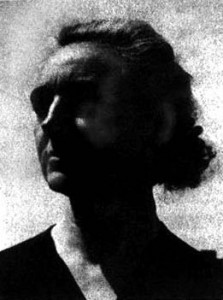
A Music Cataloger at the LOC, Laura Yust, was a recent guest-blogger and profiled Johanna Beyer (1888-1944). Please do read the full post available here. Though Beyer’s papers are at the New York Public Library (the finding aid is here), her presence can be found at the LOC through her interactions with teachers, mentors, and peers. Beyer was a student of Ruth Crawford, Charles Seeger, and Henry Cowell.

Image from: http://blogs.loc.gov/music/2011/02/johanna-beyer-a-composer-forgotten/

Yust also provided readers with a link to more resources for those interested in finding out more about this little-talked about modernist composer.

Below is a video a performance of Beyer’s Music of the Spheres (1938).

June Boyce-Tillman Premiere

by sarah - February 22nd, 2011

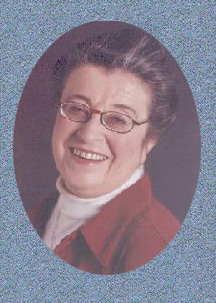
British composer and educator June Boyce-Tillman just premiered a new work in honor of Julian of Norwich(appropriately) at the Norwich Cathedral. Though the premiere managed did not appear even as a blip on the radar of music journalists, the work or performance did not get past the music blog, On an Overgrown Path.

Image from: http://www.impulse-music.co.uk/boycet.htm

Boyce-Tillman has long been recognized and respected not only for her oeuvre as a composer, but also in her intense scholarship and multiple publications about women, faith, and music. Her work has focused predominately on Hildegard of Bingen, including the formation of the Hildegard Network. Boyce-Tillman also teaches at the University of Winchester.

The piece premiered, titled Enfolded in Love, is a musical pageant commissioned by the Friends of Julian of Norwich, to celebrate the Saint’s life and works and used Norwich’s texts. Performers included a chamber orchestra, large choir of young adults (ages 8 and older), a soloist, and three folk singers who acted as a narrator – all of the performers were female.

The piece at On an Overgrown Path does a wonderful job not only giving credit where do to Boyce-Tillman with her professional and creative endeavors, but also in recognizing the lack of attention that this premiere received:

last night’s performance was not a regional or local event. June Boyce-Tillman lives in London, she is professor of applied music at the University of Winchester and her books have been translated into Dutch, Japanese, Portuguese and Polish. Yet, despite this, I looked in vain at last night’s performance for any of the mainstream music journalists who repeatedly pronounce on the future of music education from nearby London. It seems a woman composer/conductor traveling from Winchester to Norwich with a little help from a medieval mystic is not as newsworthy as a male conductor travelling from Venzuela to London with a lot of help from the commercial/intermediary complex.

Do see the full piece for more insights, observations, and links.

Conductors in the News

by sarah - February 21st, 2011

There has been a small flurry of news surrounding some of the most well known women to wield a baton.

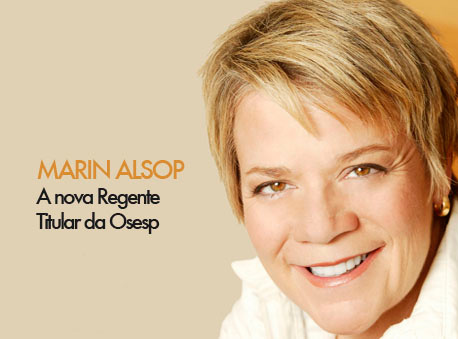
Marin Alsop has been named the principal conductor of the Sao Paolo State Symphony Orchestra of Brazil. Story here. Alsop will also continue her tenure with the Baltimore Symphony Orchestra, which she joined in 2007.

Image from: http://www.osesp.art.br/portal/home.aspx

JoAnn Falletta’s contract with the Buffalo Philharmonic Orchestra has been extended through the 2015-2016 season. Falletta has been with the BPO since the 1999-2000 season and has become the longest tenured conductor in the ensemble’s history, as well as one of the most acclaimed. You can read the full story here.

Image from: http://www.bpo.org/meet/director.php

Less happy news was that of the passing of Blanche Moyse, at the impressive age of 101. Violinist and conductor, Moyse established the music department at Marlboro College and was a founder of the Marlboro Music Festival and Brattleboro Music Center. She was also one of the most respected conductors and interpreters of Bach’s choral works. The New York Times printed her obituary, which can be found here.  However, Greg Sandow wrote a short piece and personal tribute to Moyse here.

Image from: http://www.vpr.net/news_detail/85893/

Alex Ross, Works by Women and the NYPhil

by sarah - February 17th, 2011

That the New York Philharmonic has a poor history of including women composers in their season offerings isn’t news, at least not to Women’s Philharmonic Advocacy or those of you who have been following our work.  Data from repertoire reports (which I wrote about here and here) from the past 10 years or so have shown that the NYPhil has a particularly terrible record of performing works by women composers.  Data from the 2000-01 to the 2008-09 seasons counts a grand total of 7 works by women composers performed.  They were:

  • In 2005-06: Concerto for Horn and String Orchestra by Ellen Taaffe Zwilich
  • In 2004-05: Quartre instants by Kaija Saariaho
  • And       Gathering Paradise, Emily Dickinson Seetings by Agusta Read Thomas
  • In 2002-03: Chateau de l’ame by Kaija Saariaho
  • In 2001-02: Echo Tempo for Soprano, Percussion, and Orchestra by Susan Botti
  • And       Viola Concerto by Sophia Gubaidulina
  • In 2001-02: Two Paths, Music for Two Violas and Orchestra by Sophia Gubaidulina

Alex Ross’ recent post regarding the lack of women in the 2011-12 season is unfortunate news, but not surprising.  Though I am glad for the conversations and reactions that his piece has caused throughout the music world – or, at least the blogging music world.

Christian Carey at Sequenza21 not only challenged readers to submit suggestions of their favorite women composers, but also created sample programs – though, sadly, did not include any works by women composers.

Alexandra Gardner of New Music Box also wrote about the lack of representation in the programming.

To be fair, I should note that the NYPhil will be performing a work by Gubaidulina this April, which I wrote about here.  Please note that this is the same work that was premiered by the orchestra in 1999 season, performed again in the 2001-02 season, and which was actually commissioned by Kurt Masur.  While it is wonderful that this work is getting another hearing, wouldn’t it be nice to expand the repertoire just a bit?

An Artist Profile: Julia Wolfe

by sarah - February 8th, 2011

Allan Kozinn, of the New York Times, recently offered a brief artist profile of American composer Julia Wolfe. You can read the full piece here.

Image from nytimes.com

As Kozinn conveys in his piece, Wolfe is an incredibly an incredibly active composer, involved not only with multiple ensembles who are commissioning works, but also in her own projects and ensembles, including being a founding member of Bang on a Can. She was also a 2010 finalist for the Pulitzer Prize in music for her work, Steel Hammer.
If you aren’t already with Wolfe’s music, which is generally described as having a “post-minimalist” aesthetic, listen to her arsenal of democracy below.

NY Philharmonic’s Archives Now Available Online

by sarah - February 7th, 2011

In what I’m sure was, and continues to be, a massive undertaking, the New York Philharmonic is digitizing their archives to make available online to anyone interested. The benefit to researchers, amateur and professional alike, is truly fantastic!

The project, which is still underway, currently provides the scores, images, programs and business documents from 1943-1970. Though it does show a glaring absence of women as a whole, you are able to explore all of the correspondence surrounding Nadia Boulanger’s guest conducting appearance in 1962, where the orchestra performed three works by Lili Boulanger: Psalm 130; Psalm 129; and Psalm 24. You can also see the full program – an image of which I included below.

As the project continues, the public will next gain free online access to the first documents associated with the NY Phil after it was established in 1842. You can learn more about the project as a whole in the video below.